
Stop searching for shortcuts like schemes to buy reddit upvotes to boost your reach for promoting your energy efficiency initiatives. Social media manipulation won’t reduce kilowatt-hours, lower operating costs, or convince decision-makers to fund your projects. What works is building authentic stakeholder support through documented results and compelling business cases.
Energy managers face a real challenge: you’ve identified opportunities to cut energy waste by 20-30%, but leadership dismisses efficiency as a low priority or “nice to have.” Meanwhile, your facility hemorrhages thousands in unnecessary utility costs monthly. The frustration drives some to consider artificial engagement tactics for visibility, but these approaches damage credibility precisely when you need it most.
The path forward requires different thinking. Transform your efficiency program from a technical initiative into a strategic business opportunity. Start by quantifying financial returns in terms executives understand: payback periods, internal rate of return, and freed capital for core operations. Document quick wins with monitoring data that proves results. Connect energy savings directly to organizational priorities whether that’s budget relief for universities, improved patient care funding for hospitals, or mission-critical program support for agencies.
This article provides the framework sustainability officers and energy managers actually need: practical strategies for securing buy-in, communicating value effectively, and building momentum through credible results rather than empty metrics. Real energy leadership doesn’t require gaming algorithms. It requires strategic communication backed by measurable performance.
Why Energy Professionals Search for Reddit Upvotes
The search for Reddit upvotes among energy professionals stems from a place of genuine frustration. Energy managers and sustainability officers frequently encounter a common challenge: they’ve identified substantial cost-saving opportunities and environmental improvements, yet they struggle to secure leadership buy-in or budgetary approval for their initiatives.
These professionals understand the technical merits of their proposals. They’ve calculated the return on investment, identified the efficiency gains, and outlined implementation roadmaps. However, their carefully prepared recommendations often languish in committee reviews or fail to rise above competing priorities. The difficulty isn’t technical competence—it’s capturing attention in an environment saturated with urgent demands.
This visibility gap drives some to consider social media manipulation as a solution. The reasoning follows a logical but flawed path: if energy efficiency content gains traction on platforms like Reddit, perhaps executives will notice. Maybe viral posts will create the external pressure needed to move energy sustainability goals up the priority list.
The underlying need is legitimate. Energy professionals genuinely require stronger communication channels to leadership, better tools for demonstrating value, and methods to differentiate their programs from background noise. They need stakeholders who understand that efficiency investments deliver measurable financial returns alongside environmental benefits.
However, purchased upvotes represent a misdirected solution. Leadership decisions rarely stem from Reddit popularity. Executives respond to compelling business cases, peer validation, documented results, and alignment with organizational objectives. The energy behind searching for upvotes would be far better invested in building authentic support structures, crafting persuasive narratives backed by data, and developing internal champions who advocate for efficiency initiatives through established organizational channels.
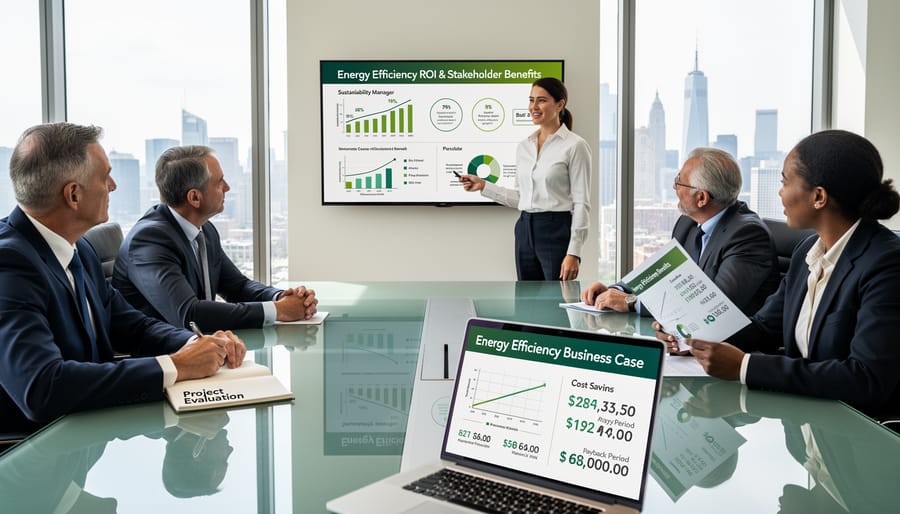
The Real Problem: Getting Stakeholder Buy-In for Energy Efficiency
Why Traditional Energy Proposals Fail to Gain Traction
Energy efficiency proposals often stall not because the projects lack merit, but because they fail to communicate value effectively. The most common pitfall is presenting proposals drowning in technical specifications—megawatts, BTUs, and HVAC system details—without translating these into business outcomes that decision-makers care about.
Another frequent mistake is presenting unclear or overly optimistic ROI calculations. When financial projections lack supporting data or ignore operational realities, stakeholders become skeptical. A hospital CFO needs to see concrete numbers: annual savings, payback periods, and impact on operating budgets, not theoretical energy models.
Poor data visualization compounds these issues. Dense spreadsheets and text-heavy reports fail to capture attention or convey urgency. Decision-makers respond to clear charts showing energy consumption trends, cost comparisons, and projected savings timelines.
Perhaps most critically, many proposals miss the broader business case. They focus solely on energy savings while overlooking comfort improvements, maintenance cost reductions, enhanced equipment reliability, or sustainability goals that align with organizational values. A university administrator considering LED upgrades cares about student experience and campus reputation as much as kilowatt-hour reductions. Successful proposals connect energy efficiency to strategic priorities, making them impossible to ignore.
What Decision-Makers Actually Want to See
Leadership teams approve energy efficiency projects when presented with concrete business value, not promises or enthusiasm alone. Start with clear payback periods—most decision-makers want to see ROI within three to five years, with many prioritizing projects that break even even sooner. Include detailed financial projections showing annual savings, implementation costs, and net present value calculations.
Carbon reduction metrics have become increasingly important as organizations face stakeholder pressure and regulatory requirements. Quantify your environmental impact in terms executives understand: tons of CO2 equivalent avoided, percentage reduction in overall emissions, and alignment with corporate sustainability commitments.
Highlight compliance benefits explicitly. Projects that help meet current or anticipated regulations reduce future risk and potential penalties. If your initiative addresses upcoming requirements, emphasize the competitive advantage of early adoption.
Finally, demonstrate how efficiency improvements enhance operational resilience and market position. Projects that reduce energy costs improve profit margins and insulate the organization from price volatility. Present comparative data showing how your proposal positions the organization relative to industry benchmarks and competitors. Decision-makers respond to evidence that energy efficiency drives tangible business outcomes beyond simply being the right thing to do.
Legitimate Strategies to Build Support for Your Energy Initiatives
Create Compelling Internal Business Cases
Building a persuasive internal business case requires more than enthusiasm for sustainability. You need concrete data that speaks to financial decision-makers. Start with a comprehensive baseline assessment that quantifies current energy consumption, costs, and inefficiencies. This foundation allows you to project realistic savings and calculate return on investment.
Financial modeling should include initial capital costs, operational savings, maintenance implications, and available incentives or rebates. Present multiple scenarios with conservative, moderate, and aggressive projections to demonstrate due diligence. Include payback periods, net present value calculations, and lifetime cost comparisons to give stakeholders various lenses for evaluation.
Benchmarking data strengthens your proposal significantly. Compare your facility’s energy performance against industry standards or similar organizations. This context reveals whether you’re lagging behind competitors or missing opportunities that peers have already captured.
Consider the University of Michigan’s successful steam system upgrade proposal. Their team documented that outdated infrastructure was costing $2.3 million annually in excess energy expenses. They presented a $15 million modernization plan with detailed engineering assessments, energy modeling showing 30 percent efficiency gains, and a 6.5-year payback period. Critically, they included case studies from peer institutions that had completed similar projects, demonstrating proven results and identifying implementation lessons learned.
The proposal passed because it addressed both financial concerns and operational risks. They quantified not just energy savings but also reduced maintenance costs, improved reliability, and deferred capital replacement expenses. This comprehensive approach transformed their efficiency initiative from an environmental wish list into a strategic business imperative that aligned with institutional priorities.
Leverage Peer Success Stories and Industry Recognition
Industry recognition builds credibility far more effectively than artificial engagement metrics. Start by pursuing legitimate certifications such as ENERGY STAR, LEED, or ISO 50001, which provide third-party validation of your achievements. These credentials carry weight with stakeholders and demonstrate commitment to verified standards.
Document your energy efficiency projects thoroughly with measurable results. Trade publications and industry journals actively seek case studies showcasing successful implementations. Submit project summaries to publications like Energy Manager Today, Building Operating Management, and sector-specific magazines relevant to your industry. Focus on quantifiable outcomes: percentage reductions in energy consumption, cost savings, and payback periods.
Participate in sustainability reporting frameworks like CDP or GRI, which enhance transparency and attract attention from investors and customers. Apply for industry awards through organizations such as the Association of Energy Engineers or regional sustainability councils. Even shortlisted nominations generate positive visibility.
Leverage peer networks by presenting at conferences, participating in industry roundtables, and contributing expert insights to webinars. These activities position your organization as a thought leader while building authentic relationships with decision-makers facing similar challenges. Real recognition from respected sources creates lasting credibility that supports long-term program success.
Build Authentic Online Communities Around Sustainability
Rather than purchasing upvotes, focus on building genuine connections within Reddit’s sustainability communities. Join subreddits like r/energy, r/sustainability, and r/GreenBuilding where facility managers and sustainability professionals exchange insights. Share your energy efficiency projects with specific data: “Our hospital reduced HVAC costs by 23% through smart controls” generates more meaningful engagement than promotional content.
Contribute thoughtfully to discussions by answering technical questions, offering troubleshooting advice, and sharing lessons learned from your implementations. When someone asks about LED retrofit ROI or building automation systems, provide concrete examples from your experience. This positions you as a knowledgeable resource rather than a marketer.
Document your energy efficiency journey through detailed case studies that address common challenges. A university administrator searching for chiller optimization strategies will appreciate a transparent post about both your successes and setbacks. Include photos, utility bill comparisons, and implementation timelines that others can reference.
Reddit rewards authenticity and expertise. Organic upvotes follow when your content solves real problems. One energy manager’s detailed breakdown of their variable frequency drive installation helped dozens of facilities and earned recognition without any artificial manipulation. This approach builds lasting professional relationships and establishes credibility that purchased engagement never could.
Proven Energy Efficiency Wins That Speak for Themselves

Hospital Energy Retrofit: 40% Reduction in 18 Months
A 450-bed regional hospital in the Midwest faced mounting energy costs that threatened to divert funds from patient care. Their energy manager proposed a comprehensive retrofit targeting HVAC systems, lighting, and building controls. However, the initiative stalled in budget committee discussions for six months despite projected savings.
The breakthrough came when the team implemented a pilot project in one wing, achieving measurable results within 90 days. They documented a 28% reduction in energy consumption for that section, translating to $15,000 monthly savings. These tangible results provided the evidence administrators needed.
The energy manager presented the pilot data at a leadership meeting, accompanied by a financial analysis showing an 18-month payback period. The board approved full-scale implementation immediately. The hospital rolled out improvements across all facilities, ultimately achieving a 40% overall reduction within 18 months and realizing $780,000 in annual savings.
Key lessons learned included starting small to build credibility, documenting everything meticulously, and translating technical achievements into financial language that resonates with decision-makers. The success created momentum for additional sustainability initiatives, including solar installation and water conservation programs. Most importantly, the demonstrated results eliminated skepticism and positioned energy efficiency as a strategic priority rather than an operational expense.
University Campus Renewable Transition: Building Stakeholder Consensus
When State University announced its commitment to a comprehensive renewable transition, administrators faced significant resistance from board members concerned about costs and operational disruptions. Rather than pushing forward without consensus, the sustainability office adopted a transparent, phased approach that transformed skeptics into advocates.
The team began by publishing detailed financial projections in quarterly reports, showing a projected 40% energy cost reduction over ten years. They created an open dashboard tracking real-time energy savings as each building upgraded to LED lighting and smart HVAC controls. Within six months, the data spoke for itself: $180,000 in documented savings.
Most importantly, they held monthly stakeholder meetings where board members could voice concerns directly with engineering teams. When questions arose about equipment reliability, the team arranged site visits to similar institutions that had successfully completed transitions. They also piloted solar installations on non-critical buildings first, demonstrating competence before tackling larger projects.
This transparent communication strategy proved essential. Board approval for the full renewable energy plan came eighteen months into the initiative, backed by measurable results rather than theoretical projections. The lesson: authentic stakeholder engagement built on real data creates sustainable support for energy efficiency programs.
Quick Wins to Demonstrate Energy Leadership
Building momentum for your energy efficiency program starts with visible, immediate wins that demonstrate your leadership and commitment. Begin with LED lighting retrofits in high-traffic areas like lobbies, conference rooms, and cafeterias. These projects typically pay for themselves within two years and provide daily reminders of your sustainability efforts to employees and visitors.
Smart thermostat installations offer another quick victory. Programming HVAC systems to reduce heating and cooling during unoccupied hours can cut energy costs by 10-15% with minimal investment. Pair this with a building occupancy audit to identify spaces being conditioned unnecessarily.
Next, address phantom power loads by installing power strips in breakrooms and office areas. Electronics in standby mode can account for 5-10% of your electricity usage. This low-cost intervention creates opportunities for staff engagement through awareness campaigns.
Consider upgrading to commercial heat pumps in smaller spaces first, such as individual offices or server rooms, to showcase the technology’s benefits before tackling larger installations.
Finally, implement energy dashboards in common areas to display real-time consumption data. Transparency drives accountability and creates organic conversations about conservation. These visible metrics help you build the credibility needed when presenting more substantial capital projects to decision-makers. Document savings meticulously from each quick win, as these success stories become powerful tools for securing budget approval for comprehensive efficiency upgrades.

The temptation to seek shortcuts like purchasing Reddit upvotes reflects a common challenge: gaining visibility for important energy efficiency initiatives in an attention-scarce environment. However, as we’ve explored throughout this article, authentic results consistently outperform artificial engagement. The business leaders and sustainability officers who succeed in advancing energy programs do so by focusing on substance, not manipulation.
Real data speaks louder than inflated metrics. When you document 30% energy cost reductions, quantify carbon footprint improvements, or demonstrate ROI within 18 months, stakeholders respond. A manufacturing facility that reduced consumption by 250,000 kWh annually needs no artificial promotion. The results generate their own momentum.
Clear communication matters equally. Present your energy efficiency case with compelling visuals, straightforward financial projections, and specific implementation timelines. Address stakeholder concerns directly. Show how efficiency initiatives align with organizational goals, whether that’s cost reduction, sustainability commitments, or operational resilience.
Strategic presentation means meeting stakeholders where they are. CFOs need financial models. Operations teams want minimal disruption timelines. Board members seek competitive advantages. Tailor your message without diluting your core findings.
Your energy efficiency initiatives deserve better than purchased credibility. They deserve the authentic support that comes from demonstrable value and professional presentation. If you’re ready to develop a compelling energy efficiency strategy that earns genuine stakeholder buy-in, our team specializes in transforming technical assessments into persuasive business cases. We help organizations like yours move from struggling for attention to commanding it through merit. Let’s build something worth talking about.