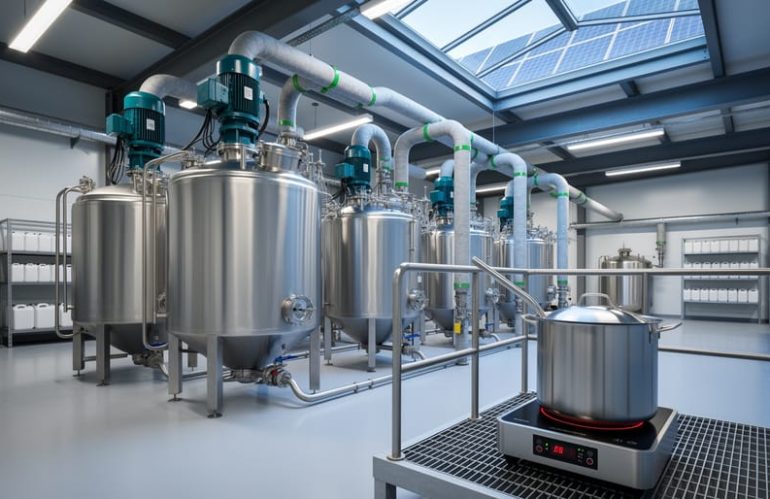
Optimize mixing equipment by upgrading to variable frequency drives (VFDs) that adjust motor speeds based on actual demand, reducing energy consumption by up to 30% during vape juice production cycles. Install heat recovery systems to capture thermal energy from cooling processes and redirect it toward heating needs in steeping rooms or ingredient preparation areas—a single heat exchanger can recover 60-70% of waste heat. Replace conventional heating elements with infrared or induction heating technologies that transfer energy directly to liquids, eliminating standby losses and cutting heating times by half while maintaining precise temperature control for nicotine suspension and flavor integration.
Schedule energy-intensive operations like large-batch mixing and sterilization during off-peak electricity hours to capitalize on lower utility rates, and implement automated shutdown protocols for equipment idle periods exceeding 15 minutes. Retrofit production facilities with LED lighting and motion sensors in storage areas, generating immediate 8-12% reductions in overall facility energy costs. Deploy real-time energy monitoring systems that track consumption by production line, enabling you to identify inefficiencies and establish measurable sustainability goals tied to units produced.
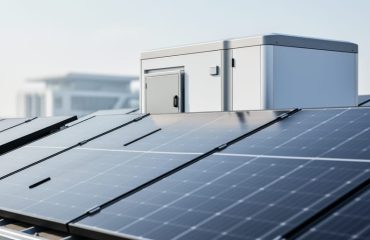
Consider transitioning to on-site solar installations or purchasing renewable energy credits to offset grid consumption—manufacturers implementing comprehensive efficiency programs alongside renewable energy typically achieve 40-50% reductions in carbon footprint within 18 months. These targeted improvements deliver both immediate cost savings and long-term competitive advantages as regulatory pressures and consumer preferences increasingly favor environmentally responsible production methods.
The Energy Footprint of Vape Juice Manufacturing
High-Energy Production Stages
Understanding where energy consumption peaks in vape juice manufacturing is the first step toward meaningful efficiency improvements. Three primary areas consistently drive the highest energy costs across production facilities.
Steeping rooms represent a significant energy draw in most operations. These climate-controlled environments maintain precise temperatures between 50-60°F for extended periods, sometimes weeks, allowing flavor compounds to properly blend and mature. The continuous refrigeration required to maintain these conditions can account for 25-35% of total facility energy use. Larger manufacturers operating multiple steeping rooms simultaneously face particularly high costs, especially in warmer climates where temperature differential increases cooling demands.
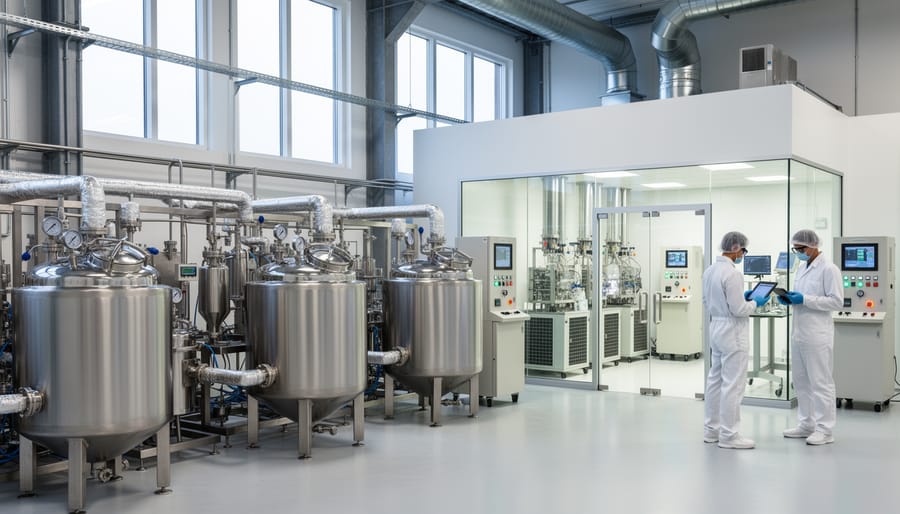
HVAC systems supporting cleanroom environments constitute another major consumption point. Regulatory compliance requires maintaining specific air quality standards, including filtered air circulation at 15-20 air changes per hour and strict humidity control between 30-50%. These systems often run continuously to prevent contamination risks, consuming substantial electricity regardless of production schedules. In facilities with ISO-certified cleanrooms, HVAC can represent 40% or more of energy costs.
Bottling lines, while seemingly straightforward, contribute measurably to overall consumption. Automated filling equipment, capping machines, labeling systems, and quality control mechanisms all require constant power. High-speed lines processing thousands of bottles hourly generate heat, necessitating additional cooling to maintain product integrity and worker comfort. Combined with lighting requirements for quality inspection stations, bottling operations typically account for 15-20% of production energy use.
Identifying these consumption hotspots enables manufacturers to prioritize improvement efforts where they’ll generate the greatest return on investment.
Hidden Energy Drains in Facilities
Many vape juice production facilities overlook significant energy waste hiding in plain sight. Compressed air systems, essential for automated filling and packaging operations, frequently operate with leaks that can waste 20-30% of generated air. A single quarter-inch leak running continuously can cost over $2,500 annually in energy expenses. Regular leak detection audits and proper maintenance schedules dramatically reduce this waste.
Lighting represents another opportunity area, particularly in 24-hour production environments. Facilities still using traditional fluorescent or metal halide fixtures consume considerably more energy than modern LED alternatives. LED retrofits typically reduce lighting energy use by 50-75% while improving visibility and reducing heat generation that can interfere with temperature-controlled processes.
Equipment standby modes deserve closer scrutiny as well. Mixing tanks, heating elements, and control systems often remain fully powered during non-production hours, drawing phantom loads that accumulate substantial costs over time. Installing programmable controllers and implementing smart power management protocols can eliminate this unnecessary consumption. Even simple solutions like automated shutdown sequences during extended downtimes generate measurable savings. Conducting a comprehensive facility energy audit reveals these hidden drains and quantifies potential improvements, establishing a clear roadmap for efficiency investments.
Proven Strategies to Reduce Production Energy Consumption
Optimize Mixing and Heating Systems
Mixing and heating processes represent significant energy consumption points in vape juice production, but targeted upgrades can substantially reduce this demand. Start by evaluating your current temperature control systems. Modern programmable logic controllers (PLCs) with precise temperature sensors minimize energy waste by maintaining exact heat levels without overshooting targets. Consider replacing outdated heating elements with efficient heating systems that deliver consistent performance while consuming less power.
Insulation improvements offer immediate returns. Wrapping mixing tanks and heated storage vessels with industrial-grade insulation jackets can reduce heat loss by 40-60%. Pay special attention to valve connections and piping junctions where thermal bridging commonly occurs. Even small gaps can waste significant energy over continuous production cycles.
Heat recovery systems capture waste thermal energy from cooling processes and redirect it to pre-warm incoming ingredients or maintain ambient production temperatures. A California-based manufacturer installed a simple heat exchanger system that recovered energy from their cooling loops, reducing their heating costs by 28% annually while improving temperature consistency.
Implement variable frequency drives (VFDs) on mixing motors to match speed with actual production needs rather than running at constant maximum capacity. This adjustment alone can cut motor energy consumption by 20-30%. Additionally, schedule high-energy mixing operations during off-peak electricity hours when utility rates are lower, maximizing both energy efficiency and cost savings.
Smart Climate Control for Cleanrooms
Cleanroom HVAC systems typically account for 40-60% of total energy consumption in vape juice manufacturing facilities, making climate control optimization a priority for cost reduction. The challenge lies in maintaining ISO-classified air quality standards while minimizing unnecessary energy expenditure.
Variable frequency drives (VFDs) on air handling units offer immediate energy savings by adjusting fan speeds to match actual demand rather than running at full capacity continuously. During non-production hours or lower-occupancy periods, these systems can reduce airflow while maintaining positive pressure differentials and appropriate air changes per hour. Properly programmed VFDs can cut HVAC energy use by 20-35% without compromising cleanroom integrity.
Implementing intelligent scheduling protocols allows facilities to align HVAC intensity with production schedules. Pre-cooling or heating during off-peak electricity rate periods, combined with strategic setback temperatures during weekends or holidays, generates substantial savings. One mid-sized facility in Colorado reduced annual HVAC costs by $42,000 simply by optimizing their 24/7 operation to match actual production needs.
Temperature stratification strategies also prove effective in high-ceiling cleanrooms. Since cleanroom classifications focus on particle counts at working heights, conditioning air only within the necessary zone rather than the entire vertical space reduces energy waste. Coupling this with economizer cycles that utilize outside air when conditions permit can further decrease mechanical cooling requirements.
Regular filter maintenance deserves attention as well. Clogged filters force systems to work harder, increasing energy consumption by up to 15%. Establishing pressure-differential monitoring helps optimize filter replacement timing, balancing filter costs against energy efficiency.
Equipment Upgrades and Process Automation
Strategic equipment upgrades deliver measurable returns through reduced energy consumption and enhanced production consistency. Modern mixing systems with variable frequency drives adjust motor speeds to match actual demand, cutting energy use by 20-30% compared to constant-speed motors. These systems also minimize product waste and improve batch uniformity.
Automated temperature control systems replace manual monitoring, maintaining precise heating and cooling parameters that prevent energy waste from overshooting target temperatures. Smart sensors continuously adjust based on ambient conditions and production requirements, eliminating the inefficiencies of human reaction time.
Consider upgrading to high-efficiency pumps and motors with premium efficiency ratings. While initial costs run higher, typical payback periods range from 18-36 months through energy savings alone. Many manufacturers report additional benefits including reduced maintenance costs and fewer production interruptions.
Programmable logic controllers streamline production sequences, ensuring equipment operates only when needed and transitions smoothly between production stages. This automation reduces idle time energy consumption by up to 40% in facilities with multiple daily batch cycles.
Investment prioritization should focus on equipment with the highest run-time hours and energy consumption rates. Conduct energy audits to identify top consumers, then evaluate replacement options based on efficiency gains, reliability improvements, and total cost of ownership rather than purchase price alone.
Wastewater Treatment and Water Conservation Methods
Efficient Water Recycling Systems
Water consumption in vape juice production creates a dual energy burden: facilities must power pumps to deliver fresh water and heat it for cleaning and sterilization processes. A typical mid-sized production facility can use 5,000-10,000 gallons of water monthly, with heating costs alone accounting for 15-20% of total energy expenditure.
Closed-loop water recycling systems address this challenge by treating and reusing process water rather than disposing of it. These systems capture water from equipment cleaning, cooling operations, and production processes, then filter and purify it for reuse. Modern membrane filtration and UV sterilization technologies can recover up to 80% of used water while meeting strict safety standards.
The energy savings multiply across multiple points. First, facilities reduce pumping requirements by minimizing fresh water intake. Second, pre-heated recycled water requires less energy to reach operational temperatures compared to cold municipal supply. Third, consistent water temperature in closed-loop systems eliminates the energy waste associated with repeated heating cycles.
A California-based vape juice manufacturer implemented a closed-loop system that reduced water consumption by 65% and cutting water heating costs by $18,000 annually. Their system paired reverse osmosis filtration with heat recovery technology that captured thermal energy from wastewater before treatment.
When selecting water recycling solutions, prioritize systems with automated monitoring to ensure water quality remains consistent. Start with low-risk applications like cooling water recycling before expanding to production-grade water recovery. Partner with water treatment specialists who understand both pharmaceutical-grade purity requirements and energy optimization strategies to maximize both safety and efficiency gains.
Reducing Chemical Use in Cleaning Operations
Cleaning protocols in vape juice facilities significantly impact energy consumption through wastewater treatment and hot water heating. Transitioning to green cleaning alternatives reduces both chemical waste and the energy required to treat contaminated water.
Consider enzyme-based cleaners that work effectively at lower temperatures, eliminating the need for energy-intensive hot water systems. These biological solutions break down residues without harsh chemicals, reducing wastewater treatment loads by up to 40 percent. A California-based manufacturer saved $18,000 annually after switching to plant-based cleaning agents that required minimal rinsing and no heated water for sanitation.
Implement dry cleaning methods where possible, such as HEPA-filtered vacuums and microfiber cloths, before wet cleaning. This approach minimizes water usage and subsequent treatment needs. For necessary wet cleaning, concentrate solutions properly to avoid excess chemical use that burdens treatment systems.
Steam cleaning equipment offers another energy-smart solution, using superheated vapor to sanitize surfaces without chemicals. While steam generation requires energy, eliminating chemical disposal and wastewater treatment often results in net energy savings of 25-30 percent compared to conventional methods.
Regular staff training ensures cleaning products are used efficiently, preventing overuse that wastes both chemicals and the energy needed to process contaminated water through treatment systems.
Renewable Energy Integration for Vape Manufacturers
On-Site Solar and Energy Storage Options
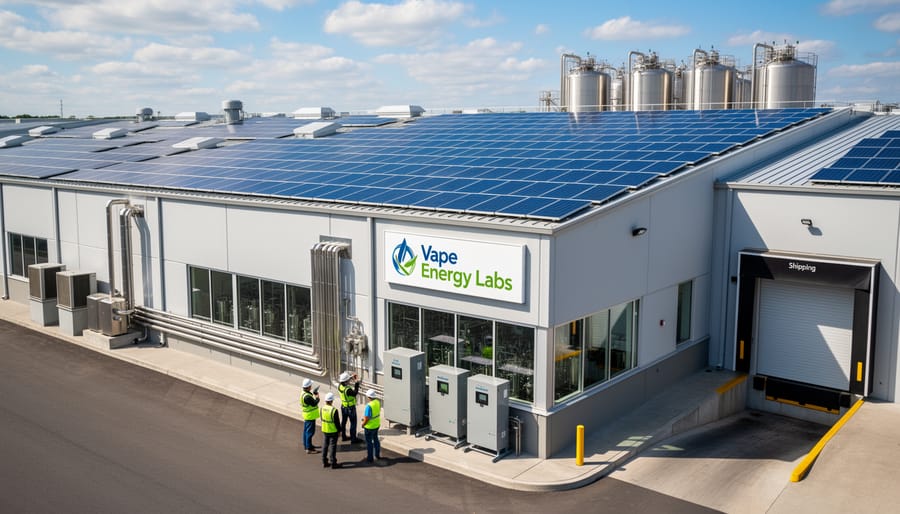
Vape juice manufacturers can significantly offset grid electricity costs through on-site solar installations tailored to production facility energy demands. A typical 50,000-square-foot manufacturing operation requires 200-300 kW of solar capacity to meet daytime production loads, with panel arrays often installed on rooftops or adjacent land. Pairing solar with battery storage systems enables facilities to store excess daytime generation for evening mixing operations and maintain production during grid outages.
Financial approaches include direct purchase, power purchase agreements where third parties own and maintain systems, and leasing arrangements requiring minimal upfront capital. Federal investment tax credits currently provide 30% cost reductions, while many states offer additional incentives for manufacturing facilities. System payback periods typically range from 5-8 years, with solar panels carrying 25-year warranties.
A California-based vape juice producer reduced annual energy costs by 68% after installing a 250 kW solar array with 100 kWh battery backup, achieving full energy independence during peak production hours. The system also provided resilience during California’s public safety power shutoffs, preventing costly production interruptions. Energy consultants can perform site assessments to determine optimal system sizing based on production schedules and local utility rates.
Renewable Energy Procurement Agreements
For vape juice manufacturers without suitable facilities for solar panels or wind turbines, renewable energy procurement agreements offer practical alternatives. Power Purchase Agreements (PPAs) enable you to contract directly with renewable energy generators, purchasing clean electricity at fixed rates without capital investment. These agreements typically span 10-20 years, providing cost predictability while demonstrating environmental commitment.
Virtual PPAs work particularly well for multi-site operations, allowing you to support renewable projects remotely while receiving financial benefits through energy price hedges. When negotiating PPAs, focus on contract flexibility, ensuring terms accommodate production scaling and potential facility relocations.
Renewable Energy Credits (RECs) provide another accessible option. By purchasing RECs, you financially support renewable energy generation equivalent to your facility’s consumption. While RECs don’t directly supply your electricity, they offer an immediate way to offset your carbon footprint and meet sustainability targets.
Many manufacturers combine approaches: purchasing RECs for immediate environmental claims while negotiating longer-term PPAs. This strategy provides flexibility as you transition toward comprehensive renewable energy sourcing. Contact regional renewable energy brokers to identify opportunities matching your production scale and budget constraints, ensuring alignment with your sustainability roadmap.
Real-World Success: Energy Efficiency in Specialty Manufacturing
VaporTech Solutions, a mid-sized specialty liquid manufacturer in Colorado, reduced energy consumption by 38% while increasing production capacity by 15%. The company invested $47,000 in targeted efficiency upgrades that delivered a return on investment within 18 months.
The facility began by conducting a comprehensive energy audit, which revealed that their mixing operations and HVAC systems accounted for 62% of total energy use. Armed with this data, management implemented a phased approach to improvements.
First, VaporTech replaced standard mixing equipment with variable frequency drive motors, allowing precise speed control based on batch viscosity requirements. This single change reduced mixing energy consumption by 29%. The company then installed heat recovery systems to capture waste heat from compressors and redirect it to their water heating system, eliminating the need for separate water heaters during most operating hours.
Climate control presented another opportunity. The facility upgraded to a smart HVAC system with zone-based temperature management, recognizing that storage areas required different conditions than production zones. Motion sensors automatically adjusted ventilation rates in low-traffic areas, while maintaining strict air quality standards in active production spaces.
VaporTech also addressed lighting by transitioning to LED fixtures with daylight harvesting capabilities in areas with natural light exposure. Combined with occupancy sensors in storage and office areas, lighting costs dropped by 41%.
Within the first year, monthly energy costs decreased from $8,200 to $5,100. The company documented these results and used the data to secure favorable terms on equipment financing for additional production lines. Employee engagement increased as team members saw tangible results from efficiency initiatives, leading to ongoing identification of additional savings opportunities.
Building Your Energy Efficiency Roadmap
Conducting an Energy Audit
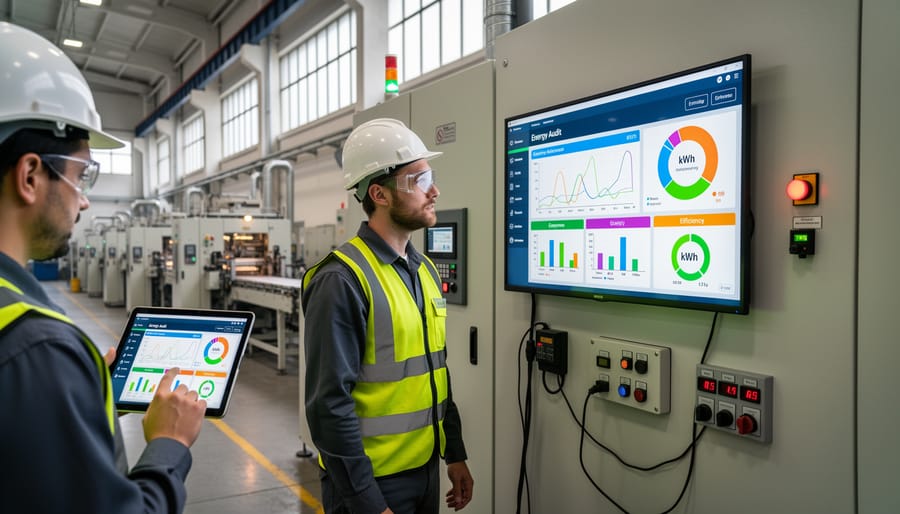
A comprehensive energy audit serves as the foundation for any efficiency improvement initiative in vape juice production. This assessment systematically examines your facility’s energy consumption patterns, equipment performance, and operational practices to identify cost-saving opportunities.
Start by gathering utility bills from the past 12-24 months to establish baseline consumption patterns. This data reveals seasonal variations and helps prioritize which areas deserve immediate attention. Next, conduct a thorough walkthrough of your production floor, noting all energy-consuming equipment including mixing systems, filling machines, HVAC units, and lighting fixtures.
For smaller operations, facility managers can perform preliminary audits using basic monitoring tools like infrared thermometers and power meters. However, commissioning a professional energy auditor often delivers superior results. Certified auditors bring specialized equipment such as thermal imaging cameras to detect heat loss, power quality analyzers to identify electrical inefficiencies, and airflow meters to assess ventilation systems.
The assessment should document operating schedules, production volumes, and maintenance practices. Pay particular attention to mixing equipment that runs continuously and climate control systems maintaining cleanroom conditions. A quality audit will provide a detailed report ranking opportunities by potential savings, implementation cost, and payback period, enabling you to build a strategic roadmap for reducing energy consumption while maintaining product quality and regulatory compliance.
Financing Energy Upgrades
Implementing energy-efficient upgrades in vape juice production requires capital investment, but numerous financing mechanisms can ease the financial burden. Federal and state tax incentives, such as the Energy Efficient Commercial Buildings Deduction under Section 179D, offer substantial benefits for facilities that meet specific energy reduction targets. Many manufacturers have reduced upgrade costs by 20-30% through these programs.
Regional utility companies frequently provide rebates for installing high-efficiency HVAC systems, LED lighting, and energy management systems. These rebates can cover 15-40% of equipment costs, significantly shortening payback periods. Contact your local utility provider to explore available programs specific to manufacturing facilities.
Green financing options have expanded considerably, with sustainability-focused lenders offering preferential rates for energy upgrade projects. These specialized loans often feature lower interest rates and extended repayment terms compared to conventional financing. Some programs tie loan terms to projected energy savings, creating cash flow-positive scenarios from implementation.
Government-backed loan programs, including those from the Small Business Administration and state energy offices, provide accessible capital for qualifying businesses. These programs often include technical assistance to identify optimal upgrade opportunities and ensure maximum return on investment.
Investing in energy-efficient vape juice production delivers substantial competitive advantages that extend far beyond reduced utility bills. Manufacturers who embrace these strategies position themselves to capture cost savings averaging 20-35% on energy expenses while simultaneously meeting increasingly stringent regulatory requirements around environmental impact and carbon reporting. This dual benefit strengthens market positioning as sustainability-conscious retailers and consumers actively seek partners with verified green credentials.
The manufacturing landscape is shifting rapidly. Companies that proactively adopt energy efficiency measures gain operational resilience against rising energy costs and regulatory changes, while those delaying face mounting pressure from both market forces and compliance mandates. Forward-thinking manufacturers are already demonstrating that sustainability and profitability align perfectly when approached strategically.
Your production facility holds untapped potential for energy optimization. Whether you’re evaluating renewable energy integration, seeking to modernize heating and cooling systems, or exploring comprehensive efficiency upgrades, taking action now positions your business for sustained competitive advantage.
Ready to transform your vape juice production into a model of energy efficiency? Our sustainability consultants specialize in manufacturing energy assessments and implementation strategies tailored to your operational needs. Contact us today for a comprehensive facility evaluation and discover your pathway to reduced costs, enhanced compliance, and market leadership through sustainable production practices.