Green energy plans allow organizations to source electricity from renewable sources like wind, solar, and hydropower, reducing carbon footprints while often stabilizing long-term energy costs. For most businesses, universities, and public institutions in 2026, the decision isn’t whether to adopt renewable energy but which approach delivers the best financial and environmental returns for your specific operations.
The market offers three primary pathways: retail green energy plans from utility providers, on-site renewable installations like rooftop solar, and power purchase agreements (PPAs) with renewable developers. Each serves different organizational needs. A 50,000-square-foot hospital will face different economics than a multi-campus university or a municipal government managing dozens of facilities.
Generic retail plans appear simple but frequently carry premium pricing without guaranteed long-term savings. Meanwhile, customized solutions require upfront analysis but typically deliver 15-30% greater cost reductions over contract lifespans. The difference lies in matching renewable capacity to your actual consumption patterns, seasonal demand fluctuations, and growth projections.
Consider a mid-sized manufacturing facility in Ohio that reduced energy costs by $180,000 annually through a tailored solar-plus-storage system, compared to the $40,000 savings projected under their utility’s standard green tariff. The customized approach required three months of energy auditing and financial modeling but paid for that investment within the first year.
This guide breaks down how green energy plans actually work, what separates effective programs from expensive distractions, and the five-step process organizational leaders use to select and implement renewable strategies that meet both sustainability mandates and budget requirements.
Understanding Green Energy Plans: What They Are and Why They Matter
Green energy plans represent more than a marketing term, they’re contractual commitments to power sources that meet specific environmental standards. According to the EPA-style green power definition green energy is a subset of renewable resources with the least environmental impact. This distinction matters when your organization makes public sustainability commitments or seeks to meet ESG reporting requirements in 2026.
The EPA recognizes six categories of green power sources, each with measurable environmental advantages:
- Solar
- Photovoltaic systems that convert sunlight directly to electricity without emissions or resource depletion during operation.
- Wind
- Turbine-generated power that produces zero direct emissions and leaves no residual waste streams.
- Geothermal
- Heat extracted from the earth’s core with minimal surface disruption and consistent output regardless of weather conditions.
- Biogas
- Methane captured from organic decomposition that would otherwise release directly into the atmosphere as a potent greenhouse gas.
- Eligible Biomass
- Plant-based fuels meeting strict EPA sustainability criteria that avoid forest degradation and food supply competition.
- Low-Impact Hydroelectric
- Small-scale water power installations that preserve river ecosystems and avoid the environmental costs of large dam projects.
Not every renewable energy source qualifies as green power under these standards. Large hydroelectric dams, for instance, generate renewable electricity but fail to meet the low-impact threshold due to habitat disruption and methane emissions from reservoir decay. Similarly, some biomass sources, while technically renewable, can deplete soil quality or compete with food production.
For universities tracking Scope 2 emissions, hospitals maintaining sustainability accreditations, and government agencies meeting carbon reduction mandates, this distinction is operational, not academic. A green energy plan sourced from EPA-qualifying resources provides defensible documentation for third-party audits and stakeholder reporting. Generic renewable plans may include energy sources that don’t align with your stated environmental commitments, creating gaps between your organization’s public pledges and actual consumption patterns.
In 2026, as carbon disclosure requirements tighten and stakeholders scrutinize environmental claims more closely, the precision of your energy sourcing matters as much as the volume of renewable capacity you purchase.
The One-Size-Fits-All Problem with Standard Energy Plans
Standard green energy plans arrive at your door with promises of sustainability and savings, but they share a fundamental flaw: they assume your organization operates like every other. A hospital running critical equipment around the clock faces vastly different energy demands than a university with seasonal occupancy patterns. A manufacturing facility with heavy machinery during second shift has nothing in common with a government office building that empties at 5 p.m. Yet generic plans treat all these scenarios identically.
The disconnect becomes expensive when energy usage patterns clash with plan structures. Many standard offerings optimize for residential consumption profiles, not institutional operations. Your facility might draw peak power during off-hours when these plans provide minimal value, or you could face demand charges that weren’t factored into the projected savings. A pre-packaged solar option might assume roof space and orientation that your century-old building simply doesn’t have.
Budget constraints compound the problem. Generic plans typically present fixed pricing tiers that ignore your fiscal year cycles, capital improvement schedules, and spending authority thresholds. The “standard” implementation timeline might require upfront investments your current budget can’t accommodate, even when long-term savings are clear. Financing structures designed for residential customers rarely align with institutional procurement requirements or multi-year planning horizons.
Operational realities get overlooked entirely. A hospital cannot risk power interruptions during plan transitions. A research university needs redundancy for sensitive laboratory equipment. A government agency must satisfy compliance requirements that standard energy agreements don’t address. These mission-critical factors receive checkbox acknowledgment in generic proposals but rarely drive the actual plan design.
The result? Organizations either abandon green energy initiatives after disappointing results or lock into agreements that fail to deliver the environmental impact and cost reduction they expected. The plans weren’t poorly designed; they simply weren’t designed for you.
Core Components of Customized Green Energy Solutions
Energy Audit and Baseline Assessment
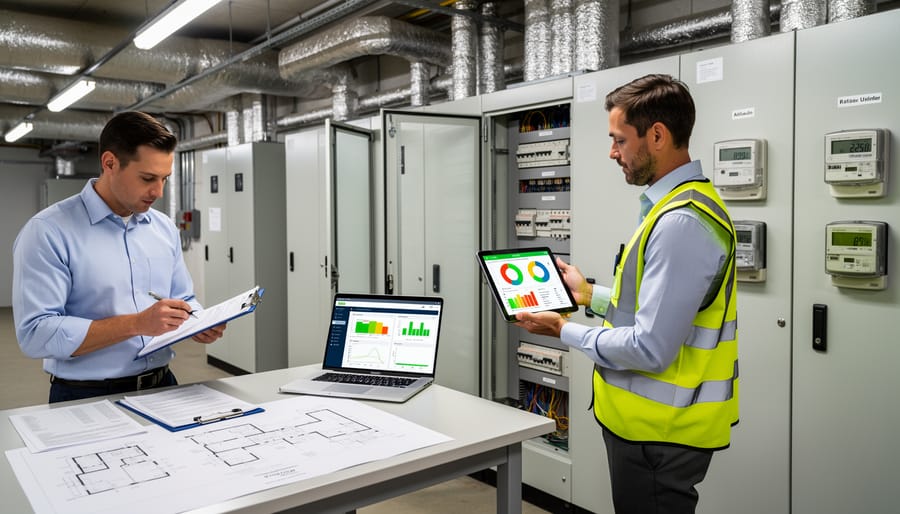
Before an organization can select an effective green energy plan, it needs a clear picture of where its energy dollars actually go. An energy audit establishes this baseline by tracking consumption patterns across all facilities, identifying when usage peaks occur, and uncovering the operational factors driving demand.
Start by analyzing at least twelve months of utility data. This reveals seasonal variations, weekend versus weekday patterns, and how consumption shifts throughout the day. Many organizations discover that their highest usage falls squarely within the 4-9 p.m. peak window when electricity costs the most. A hospital running critical systems around the clock has fundamentally different needs than a university with predictable academic-year cycles or a government office with standard business hours.
The audit should map energy use to specific activities and equipment. Which departments or buildings consume the most power? Are there inefficient HVAC systems, outdated lighting, or equipment running unnecessarily during off-hours? Understanding these specifics prevents selecting a plan that looks attractive on paper but fails to address actual consumption realities.
This assessment also identifies facility constraints that affect green energy options. Does the building have suitable roof space and sun exposure for solar? Is the electrical infrastructure capable of supporting new systems? Are there regulatory or historic preservation restrictions that limit modifications?
Armed with this baseline data, organizations can evaluate green energy plans against their real operational profile rather than average usage assumptions. The right plan matches your specific consumption patterns, leverages your facility strengths, and accounts for your constraints, making customization essential rather than optional.
Renewable Energy Procurement Strategies
Organizations source green energy through four primary procurement channels, each suited to different operational profiles and strategic objectives.
On-site generation through solar installations offers the greatest control and long-term cost predictability. Solar adopters who start on the Solar Billing Plan before 2028 receive Energy Export Bonus Credits for power sent back to the grid, adding financial value beyond direct consumption savings. These customers can achieve up to 40% savings on electric charges compared to non-solar customers. However, on-site generation requires upfront capital, adequate facility space, and favorable site conditions. Pairing solar with time-of-use rate optimization delivers compound savings: shifting discretionary loads away from TOU on-peak hours (typically 4-9 p.m.) reduces grid draws during expensive peak periods when solar production naturally declines.
Power purchase agreements (PPAs) allow organizations to contract directly with renewable energy developers for electricity at fixed rates over 10-25 years, insulating budgets from utility rate fluctuations without facility construction. PPAs work best for large energy consumers with strong credit profiles who want renewable procurement without asset ownership.
Renewable energy certificates (RECs) represent the environmental attributes of green power generation separated from the physical electricity. Organizations purchase RECs to match their conventional electricity consumption with renewable generation elsewhere, satisfying sustainability reporting requirements at lower cost than physical power contracts.
Utility green power programs offer the simplest entry point. Programs like SVCE provide renewable electricity through existing utility relationships, with participating CARE and FERA customers receiving monthly bill credits of $12 in 2026. These programs require no capital investment or contract negotiation but offer less customization than other procurement methods.
| Procurement Approach | Best For | Implementation Timeline | Cost Structure |
|---|---|---|---|
| On-site Solar | Facilities with adequate roof/land space and long-term occupancy | 6-18 months | High upfront capital, low ongoing costs |
| Power Purchase Agreement | Large energy users seeking budget certainty without ownership | 6-12 months | Fixed per-kWh rate over contract term |
| Renewable Energy Certificates | Organizations prioritizing sustainability claims over direct cost savings | 1-3 months | Market-rate per certificate |
| Utility Green Programs | Smaller users wanting simple renewable procurement | Immediate (billing cycle) | Premium over standard utility rates |
The optimal strategy often combines multiple procurement methods. A hospital might install rooftop solar for daytime baseload, enter a PPA for additional capacity, and purchase RECs to cover remaining consumption during solar installation phases. This layered approach balances financial returns, operational risk, and sustainability goals while accommodating facility-specific constraints that single-method plans cannot address.
Energy Resiliency and Storage Integration
Customized green energy plans must address operational continuity, especially for facilities where power interruptions carry serious consequences. A hospital emergency department can’t wait for the grid to recover, and a university data center can’t risk losing research data during an outage.
Energy storage systems, typically lithium-ion batteries paired with solar installations, provide backup power during grid failures while also enabling load shifting to avoid expensive peak-period charges between 4-9 p.m. Organizations with critical operations should size storage capacity to maintain essential functions for the required duration, whether that’s two hours for life-safety systems or twelve hours for full facility operation.
Grid independence doesn’t mean complete disconnection. The most effective customized plans create hybrid systems that draw from solar generation and storage during peak hours, fall back on grid power during extended cloudy periods, and export excess generation when advantageous. This approach reduces both costs and vulnerability.
For organizations with inconsistent power quality or frequent outages, integrating automatic transfer switches and microgrid capabilities transforms green energy from a sustainability initiative into a business continuity strategy. The upfront investment in resiliency infrastructure pays dividends through avoided downtime costs, lower demand charges, and protection against grid volatility.
Real-World Results: Customization in Action
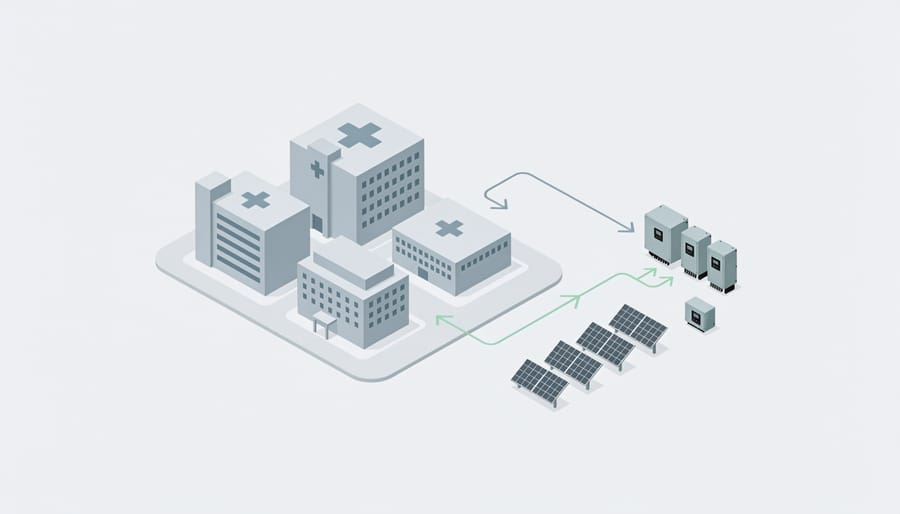
A mid-sized regional hospital in California’s Central Valley faced a challenge that generic green energy plans couldn’t address: wildfire season power shutoffs threatened patient care during the state’s most dangerous months. The facility’s energy needs didn’t align with standard solar-plus-storage packages designed for commercial offices. Patient monitoring equipment, surgical suites, and refrigerated medication storage required uninterrupted power 24/7, with usage patterns that spiked unpredictably based on emergency admissions rather than predictable business hours.
The customized solution combined on-site solar arrays sized specifically for the hospital’s baseline daytime consumption, paired with battery storage capacity calculated around critical care requirements rather than whole-facility backup. The energy audit revealed that by shifting non-critical operations like laundry and kitchen prep away from the 4-9 p.m. peak period, the hospital could maximize solar self-consumption and minimize grid dependence during high-cost hours. Within 18 months of implementation, the hospital reduced grid electricity purchases by 62% and cut annual energy costs by $340,000. During the 2025 wildfire season, the facility maintained full operations through three multi-day public safety power shutoffs without relying on diesel generators.
A large public university in the Pacific Northwest presented different obstacles. The campus included 80 buildings of varying ages, from historic structures with preservation restrictions to modern research facilities with heavy HVAC loads. A standard renewable energy certificate program would have provided green credits on paper without addressing the institution’s aging infrastructure or rising utility costs. The customized approach started with building-by-building energy modeling to identify where efficiency upgrades would deliver the highest returns before layering in renewable procurement.
The university implemented a phased strategy: deep energy retrofits in the 12 highest-consuming buildings, rooftop solar on newer structures without historical designation, and a power purchase agreement for wind energy to cover remaining load. The plan accounted for academic calendar fluctuations, with summer session energy patterns differing dramatically from fall and spring terms. Three years into the program, campus-wide energy intensity dropped 28%, operating costs decreased by $1.2 million annually, and the university now sources 73% of its electricity from renewable generation. The financial savings funded additional sustainability staff positions and ongoing building upgrades, creating a self-reinforcing cycle of improvement that a generic plan never could have achieved.
Maximizing Financial Benefits Through Strategic Plan Design
Strategic plan design transforms green energy from an operational expense into a financial asset. Organizations that customize their energy approach rather than accepting standard packages consistently capture value that generic plans leave on the table.
Rate structure optimization forms the foundation. Time-of-use pricing creates immediate opportunities: facilities that shift discretionary loads away from 4-9 p.m. peak periods can dramatically reduce their electricity costs. A university that reschedules HVAC system updates, laboratory equipment calibrations, or data center maintenance to off-peak hours captures these savings automatically. The customization matters because your facility’s operational flexibility differs fundamentally from others in your sector.
Solar adoption before 2028 unlocks specific advantages. Organizations implementing solar and starting on Solar Billing Plans by that date qualify for Energy Export Bonus Credits, creating an additional revenue stream from excess generation. The 2028 deadline means action in 2026 allows adequate time for procurement, installation, and interconnection without rushing critical decisions. Solar Billing Plan customers achieve up to 40% savings on electric charges compared to non-solar customers, though actual savings depend heavily on load profiles, system sizing, and consumption patterns, factors that strategic design addresses directly.
Program benefits require eligibility alignment. Qualified organizations can access monthly credits like the $12 CARE and FERA reductions available through some providers, but only customized plans ensure these benefits stack effectively with other financial strategies.
Financing structures must match organizational realities. Universities operate on academic year budget cycles. Hospitals need predictable monthly costs for board approval. Government agencies face fiscal year constraints and procurement regulations. Standard green energy contracts ignore these requirements. Customized financing, whether through power purchase agreements with aligned payment schedules, on-balance-sheet ownership that captures depreciation benefits, or lease structures that preserve capital for core operations, turns budget constraints into strategic advantages rather than obstacles.
The financial case for customization isn’t theoretical. Organizations implementing strategic energy plans routinely identify 15-30% cost reductions compared to their best generic alternative, with payback periods shortened by two to four years through optimized incentive capture and rate management.
Your Roadmap to a Customized Green Energy Plan
Developing a customized green energy strategy requires a structured approach that moves your organization from assessment to implementation. The following roadmap guides decision-makers through the essential phases of creating a plan that addresses your specific operational needs and sustainability goals.
- Conduct a comprehensive energy audit to establish your baseline consumption patterns, peak demand periods, and facility-specific constraints. Document current utility costs and carbon emissions across all locations.
- Assemble a cross-functional team including facilities management, finance, operations, and sustainability officers. Define clear decision-making authority and establish regular communication channels.
- Evaluate renewable procurement options that match your operational requirements. Compare on-site solar generation, power purchase agreements, and utility green power programs against your baseline data. Consider timing advantages such as enrolling in solar before 2028 to capture Energy Export Bonus Credits.
- Screen potential vendors using criteria beyond price: proven experience with organizations in your sector, technical expertise in addressing your facility type, transparent performance guarantees, and comprehensive post-installation support.
- Develop a phased implementation timeline that aligns with budget cycles and operational schedules. Account for procurement lead times, installation periods, and seasonal demand variations.
- Establish performance monitoring systems from day one. Track energy production, consumption patterns during critical periods like the 4-9 p.m. window, cost savings against projections, and carbon reduction metrics. Schedule quarterly reviews to identify optimization opportunities.
Most organizations complete this process in six to twelve months from initial assessment to full implementation. The timeline varies based on facility complexity, financing arrangements, and procurement method selected. Organizations that skip the thorough assessment phase often discover costly misalignments between their chosen plan and actual operational needs, while those following this structured approach achieve measurable results that compound over time.
The gap between green energy aspirations and operational realities explains why so many transitions underperform. Organizations that rely on standardized plans often discover too late that their facility’s peak demand patterns, existing infrastructure constraints, and budget cycles weren’t factored into the solution. Meanwhile, those who invest in customized approaches see measurable results: lower operating costs, more reliable power systems, and progress toward sustainability commitments that stakeholders actually recognize.
Your organization’s energy needs are as unique as your operations. A customized green energy plan acknowledges that reality from day one, building a strategy around your consumption patterns, financial parameters, and long-term objectives rather than forcing you to adapt to a prepackaged offering. The difference shows up in your bottom line and your carbon footprint.
Ready to explore what a truly tailored green energy solution could accomplish for your organization? Customized Energy Solutions works with businesses, universities, hospitals, and government agencies to design and implement renewable energy strategies that reflect operational realities. Contact us today to discuss how a customized approach can transform your energy transition from a sustainability checkbox into a strategic advantage that delivers lasting value.