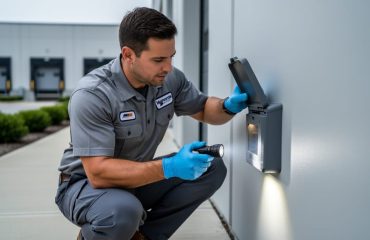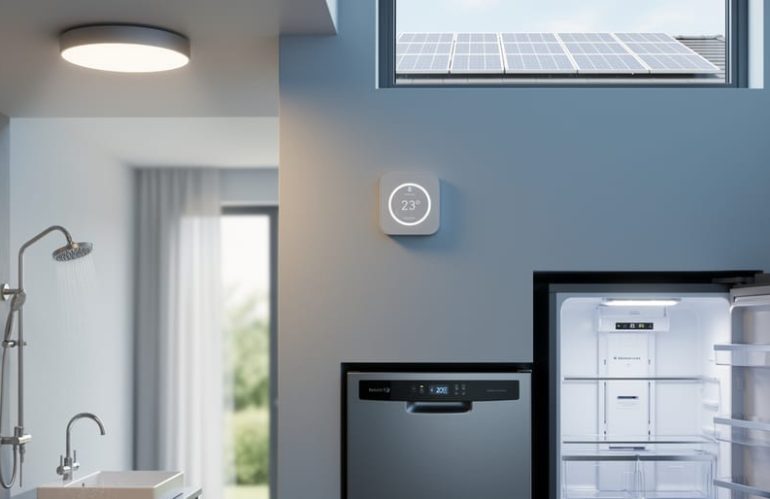
Sustainable home essentials center on five core categories that deliver measurable environmental and financial returns: energy-efficient appliances, water conservation fixtures, smart climate controls, sustainable materials, and renewable energy systems. These upgrades typically reduce household energy consumption by 20 to 40 percent while cutting utility costs by $500 to $1,200 annually, with most investments achieving payback within three to seven years.
For sustainability officers and facility managers, residential applications offer valuable insight into scalable solutions for institutional settings. The same LED lighting systems that reduce home energy use by 75 percent translate directly to campus-wide implementations. Smart thermostats that optimize residential HVAC systems mirror the building automation platforms deployed in commercial facilities. Understanding these parallels helps professionals evaluate technologies in low-risk home environments before recommending institutional adoption.
The connection between residential and commercial energy sustainability runs deeper than product specifications. Both contexts require lifecycle cost analysis, occupant behavior considerations, and integration with existing infrastructure. A hospital sustainability officer who implements low-flow fixtures at home gains firsthand experience with installation challenges, maintenance requirements, and user acceptance factors that inform larger projects.
This guide prioritizes essentials with proven track records across residential and institutional applications. Each recommendation includes specific performance metrics, implementation strategies, and case examples from facilities that have achieved measurable results. Whether you’re upgrading a single-family home or researching options for a multi-building campus, these fundamentals provide a practical foundation for decision-making.
Smart Thermostats and HVAC Controls: Your First Line of Defense
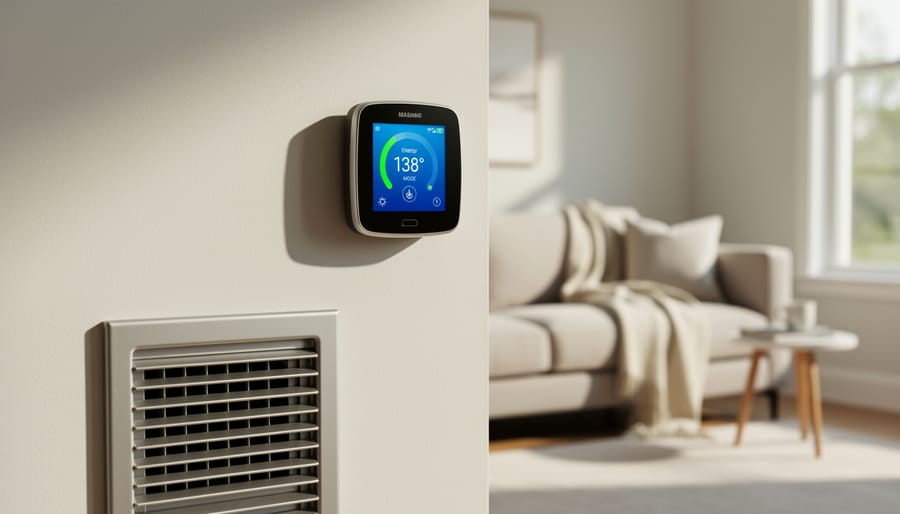
Smart thermostats represent the highest-impact entry point for residential energy efficiency because they directly control your largest energy expense. HVAC systems typically account for 40-50% of home energy consumption, making thermostat upgrades a strategic first investment that influences every heating and cooling decision.
Modern programmable thermostats allow precise scheduling aligned with occupancy patterns, eliminating energy waste during unoccupied hours. Learning thermostats take this further by adapting to behavioral patterns automatically, adjusting temperature setpoints based on detected presence and historical preferences. The energy savings are substantial: most households see 10-23% reductions in heating and cooling costs, translating to $150-$300 in annual savings for typical residential applications. These savings compound when thermostats integrate with renewable energy systems, prioritizing HVAC operation during peak solar production hours and reducing grid demand during expensive peak periods.
Remote monitoring capabilities extend beyond convenience. Property managers and institutional housing operators gain visibility into system performance, identifying maintenance issues before they escalate into failures. Alerts for abnormal runtime patterns, filter change reminders, and temperature deviation warnings transform reactive maintenance into preventive operations.
A 2024 University of Colorado housing department case study illustrates the scalable impact. The university installed networked learning thermostats across 12 residence halls housing 3,200 students. Centralized monitoring revealed inconsistent setpoint patterns and overnight heating in unoccupied common areas. After implementing occupancy-based scheduling and optimizing temperature bands, the program achieved 18% reductions in heating energy and 15% cooling savings within the first year. Total energy cost savings reached $127,000 annually while maintaining resident comfort satisfaction scores above baseline.
The data infrastructure built through smart thermostat deployments creates the foundation for broader energy management strategies. When your HVAC system actively responds to real-time conditions and usage patterns, every subsequent efficiency upgrade becomes more effective. Proper HVAC control is essential to cut energy bills and establish the baseline performance metrics needed to evaluate additional sustainability investments.
LED Lighting Systems: Beyond the Bulb
While swapping incandescent bulbs for LEDs cuts lighting energy use by up to 75%, that baseline upgrade is just the entry point. Modern lighting systems layer controls, sensors, and intelligent dimming to extract far greater savings while improving occupant comfort and supporting broader energy management goals.
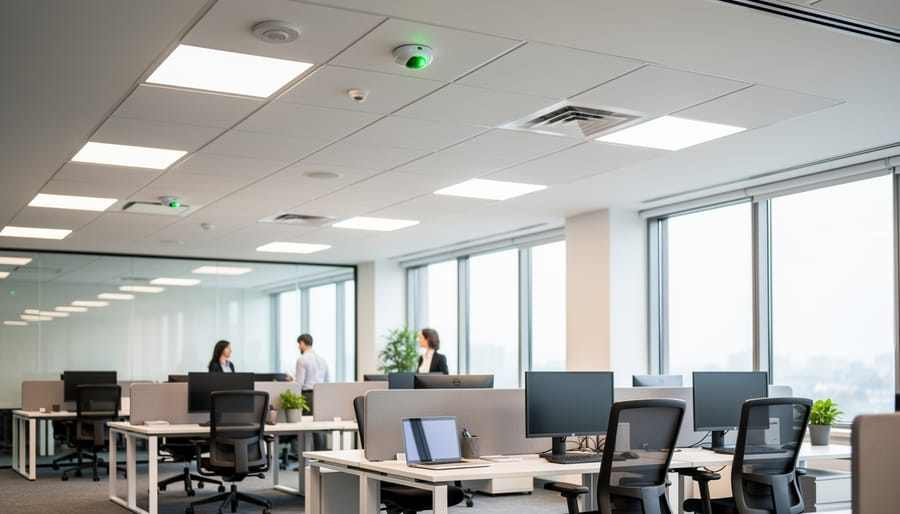
Integrated lighting controls transform static fixtures into responsive systems. Occupancy sensors automatically shut off lights in unoccupied spaces, eliminating the wasted energy that accounts for roughly 30% of commercial lighting consumption and a similar proportion in residential settings. Daylight harvesting systems use photosensors to dim artificial lighting when natural light is sufficient, reducing midday energy draw. Dimming capabilities extend lamp life while providing precise light levels for different tasks, from focused reading to ambient evening lighting.
| Technology | Lifespan (hours) | Energy Use (watts/bulb) | Heat Output | 10-Year Cost |
|---|---|---|---|---|
| Incandescent | 1,000 | 60 | High (90% heat) | $180 |
| CFL | 8,000 | 14 | Medium (70% heat) | $60 |
| LED | 25,000-50,000 | 10 | Low (20% heat) | $35 |
Color temperature selection matters more than many realize. Measure it in Kelvin: 2700K produces warm, relaxing light suitable for bedrooms and living areas, while 4000-5000K delivers crisp, energizing light ideal for kitchens, bathrooms, and task-oriented spaces. Matching color temperature to room function enhances circadian rhythm alignment and reduces eye strain without adding energy cost.
When integrated with building management or smart home platforms, lighting systems become active participants in demand response programs. Automated dimming during peak pricing periods reduces both consumption and utility costs. These same control strategies scale directly from residential applications to institutional facilities, making home lighting upgrades practical laboratories for larger sustainability initiatives.
High-Performance Insulation and Air Sealing
Thermal envelope performance determines how effectively your home retains conditioned air, yet most sustainability discussions skip straight to equipment upgrades without addressing this foundation. Poor insulation and air leakage force HVAC systems to work harder, wasting energy regardless of how efficient your furnace or air conditioner may be.
R-value measures insulation’s resistance to heat flow. Attic insulation should reach R-38 to R-60 depending on climate zone, while wall cavities typically require R-13 to R-21. Many older buildings fall short of these standards. Adding insulation to attics delivers the highest return, as heat rises and roof surfaces face maximum temperature differentials. Cathedral ceilings, basement walls, and crawl spaces represent secondary priorities where thermal bridging and moisture management require careful attention.
Air sealing proves equally critical. Homes lose 25 to 40 percent of heating and cooling energy through gaps around windows, doors, electrical outlets, plumbing penetrations, and attic hatches. Blower door testing quantifies air leakage and identifies problem areas. Sealing these gaps with weatherstripping, caulk, and spray foam costs little but dramatically improves comfort and efficiency.
The synergy between insulation and renewable energy warrants emphasis. A well-sealed, properly insulated home requires smaller HVAC equipment and less energy overall, which means solar panel systems can be sized smaller while still meeting total energy needs. For institutions evaluating building performance, this same principle applies. Our healthcare clients consistently find that envelope improvements reduce peak demand and allow right-sizing of expensive mechanical systems.
Material selection matters for long-term performance. Cellulose and mineral wool resist moisture better than fiberglass batts. Closed-cell spray foam provides both insulation and air sealing but requires professional installation. For renovations, exterior continuous insulation eliminates thermal bridging through wall studs while protecting existing wall assemblies from condensation risk.
Water Conservation Fixtures: The Energy-Water Nexus
Water conservation fixtures represent one of the most overlooked opportunities in home energy management. The connection isn’t immediately obvious: water-efficient devices save energy because nearly 20% of residential energy consumption goes toward heating water. Every gallon you don’t use is a gallon you don’t heat.
Low-flow showerheads have evolved considerably beyond the weak, unsatisfying trickles of earlier generations. Current WaterSense-labeled models deliver 2.0 gallons per minute or less, compared to standard 2.5 GPM fixtures, while maintaining pressure through aerating or laminar-flow technologies. A household switching to low-flow showerheads typically saves 2,900 gallons annually per person, translating to roughly 300 kWh of water heating energy. That’s $40-50 in annual savings per shower location, with fixtures costing $15-80.
Faucet aerators offer similar benefits at minimal cost. Kitchen and bathroom aerators reduce flow from 2.2 GPM to 1.5 GPM or lower without noticeably affecting performance for most tasks. The payback period runs under six months in most cases.
Dual-flush toilets deserve attention not for energy savings directly, but for their role in the broader water-energy nexus. Municipal water treatment and distribution consume substantial electricity, approximately 4% of U.S. power generation. Wastewater treatment adds another significant load. Dual-flush models use 0.8 gallons for liquid waste and 1.6 gallons for solid waste, compared to standard 1.6-gallon single-flush toilets, reducing household water consumption by 4,000 gallons yearly.
For institutions managing multiple facilities, residential water efficiency pilots provide valuable data on fixture performance, user acceptance, and maintenance requirements before scaling to dormitories, administrative buildings, or patient housing.
Energy-Efficient Appliances: The ENERGY STAR Standard and Beyond
ENERGY STAR certification represents the baseline for energy-efficient appliances, but understanding which upgrades deliver the greatest impact requires looking at actual consumption data. Refrigerators, water heaters, washing machines, and dishwashers account for roughly 30% of household energy use, making them prime targets for meaningful reductions.
Refrigerators consume 400-600 kWh annually in older models, while current ENERGY STAR certified units use 200-300 kWh. That translates to $30-50 in annual savings at typical electricity rates, with a payback period of 7-10 years when replacing a functioning unit. The calculation shifts dramatically when replacing a failing appliance, where the incremental cost between standard and high-efficiency models pays back within 2-3 years.
Heat pump water heaters represent the most significant efficiency leap available today, using 50-65% less energy than conventional electric resistance models. While upfront costs run $1,200-2,500 installed compared to $800-1,200 for standard units, annual savings of $200-350 create payback periods of 3-5 years. These systems work by moving heat rather than generating it, drawing ambient air heat to warm water with a coefficient of performance between 2.0 and 3.5.
Front-loading washing machines use 40-50% less water and 50% less energy than top-loaders, primarily because water heating accounts for 90% of a washing machine’s energy consumption. Models with advanced moisture sensors in dryers prevent over-drying, cutting energy use by 15-20% per load.
Lifecycle considerations extend beyond operational efficiency. Proper disposal through manufacturer take-back programs or certified e-waste recyclers prevents refrigerant release and recovers valuable materials. Several major retailers now offer haul-away services that ensure responsible recycling when delivering new appliances. Many utility companies provide rebates ranging from $50-500 for ENERGY STAR appliances, effectively reducing payback periods by 1-2 years. State and federal tax credits periodically enhance these incentives, particularly for heat pump water heaters and high-efficiency HVAC systems.
When evaluating appliances, compare the yellow EnergyGuide label’s estimated annual operating cost rather than just the ENERGY STAR badge. Some certified models barely exceed the threshold, while others exceed it by 20-30%, delivering substantially greater savings over their 10-15 year lifespan.
Home Energy Monitoring Systems
Real-time energy monitoring systems transform abstract utility bills into actionable intelligence. These devices track your home’s electricity consumption down to the circuit or appliance level, displaying usage data through smartphone apps or web dashboards. The immediate feedback loop creates powerful behavioral shifts: studies show homeowners with monitoring systems reduce consumption by 8-12% through awareness alone, without additional equipment upgrades.
Modern monitors integrate seamlessly with smart home platforms like Google Home, Apple HomeKit, and Amazon Alexa, enabling automation rules based on consumption thresholds. When your system detects unusual energy draw, a water heater failing to cycle off or an HVAC system running inefficiently, you receive instant alerts before the issue compounds into costly damage or wasted energy.
The technology’s value extends beyond individual cost savings. Grid-interactive monitoring systems enable demand response participation, where utilities compensate homeowners for temporarily reducing load during peak periods. Your monitor communicates with grid operators through programs like AutoGrid or OhmConnect, automatically shifting discretionary loads like EV charging or pool pumps to off-peak hours. This capability strengthens grid resiliency while lowering your energy costs through time-of-use rate optimization.
For sustainability officers evaluating institutional energy management, residential monitoring systems offer valuable proof of concept. The granular data and user engagement models translate directly to campus housing, hospital staff residences, or municipal facilities. Installations cost $200-400 for whole-home systems, with ongoing insights that inform both immediate behavioral changes and strategic upgrade decisions.
Renewable Energy Integration: Solar-Ready Essentials
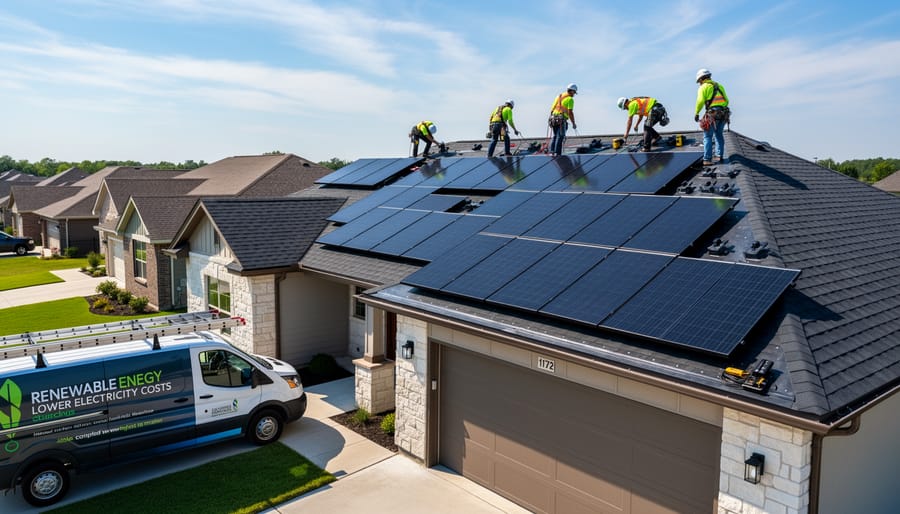
Installing solar panels isn’t always feasible immediately, but preparing your home’s infrastructure now saves thousands in future retrofitting costs. A solar-ready foundation positions your property to capture renewable energy benefits when the timing or financing aligns with your goals.
Start with your electrical panel. Most solar installations require 200-amp service minimum, yet many older homes operate on 100-amp or 150-amp panels. Upgrading during a renovation or service replacement costs $2,000 to $3,500, but postponing until solar installation adds complexity and often doubles that expense. Ensure your panel includes sufficient breaker spaces for both solar inverter connections and potential battery storage integration.
Roofing material and condition determine solar feasibility more than most homeowners realize. Asphalt shingles with 15-plus years of remaining life work well, while deteriorating roofs force an expensive removal and reinstallation of panels within a few years. If replacing your roof, consider 50-year architectural shingles or metal roofing that outlasts typical solar panel warranties. South-facing roof sections with minimal shade exposure between 9 AM and 3 PM offer optimal placement, though east-west configurations work for many systems.
Battery-ready infrastructure includes conduit pathways from your electrical panel to likely battery locations, typically garages or utility rooms. Even empty conduit installed during construction or remodeling costs under $500 but eliminates invasive wall penetrations later. Consider dedicated 240-volt circuits in these spaces to support Level 2 EV charging, which increasingly pairs with home battery systems for load management.
These preparations mirror institutional approaches where facilities teams design electrical infrastructure with renewable integration as a planning assumption rather than an afterthought. Universities and hospital systems installing solar routinely oversize electrical rooms and transformer capacity during construction, recognizing that renewable additions deliver better economics than fossil fuel reliance. Your home benefits from identical forward planning, creating flexibility for energy independence as technology costs decline and utility rates rise.
Implementing Your Sustainable Essentials Strategy
Prioritize your sustainable upgrades through a systematic energy assessment. Start with a professional home energy audit or use free utility-sponsored assessments to identify your biggest energy losses. Many utilities offer subsidized or no-cost evaluations that include blower door testing, thermal imaging, and appliance efficiency analysis. These audits pinpoint where your investment delivers the highest return.
Once you have baseline data, create your implementation roadmap using this prioritization sequence:
- Address air sealing and insulation deficiencies first, these foundational fixes amplify every other upgrade’s effectiveness and often deliver 15-25% energy reductions.
- Replace aging HVAC equipment and water heaters with high-efficiency models, capturing utility rebates that can offset 20-40% of equipment costs.
- Install smart thermostats and energy monitoring systems to establish behavioral baselines and identify consumption patterns.
- Upgrade to LED lighting and high-performance appliances as existing equipment reaches end-of-life, avoiding premature replacement waste.
- Integrate renewable energy systems once efficiency measures have reduced overall demand, maximizing solar panel ROI and minimizing required system size.
Finance your strategy through layered incentive programs. Federal tax credits currently cover 30% of renewable energy and efficiency upgrade costs. State and utility rebate programs add thousands more for specific equipment categories. Energy-efficient mortgages and Property Assessed Clean Energy (PACE) financing spread costs over extended terms while capturing immediate energy savings that offset payments.
Your residential experience directly informs business sustainability strategies. A Midwest hospital system piloted LED retrofits, smart HVAC controls, and water conservation fixtures in 50 staff housing units before implementing facility-wide. The residential program generated 28% energy savings with six-month payback periods, proving the business case for their $2.3 million hospital efficiency investment. Staff familiarity with the technology reduced training time and accelerated institutional adoption, while the housing program itself qualified for workforce development grants that partially funded the pilot.
The sustainable home essentials outlined here deliver measurable returns whether implemented in a single residence or scaled across institutional portfolios. Smart thermostats, LED systems, high-performance insulation, and water-efficient fixtures consistently reduce energy consumption by 20-40% while improving occupant comfort, outcomes that translate directly to commercial and institutional settings.
These upgrades offer more than household savings. For sustainability officers and facility managers, residential implementations provide low-risk testing grounds for technologies and strategies before campus-wide or system-wide deployment. The data generated from home efficiency projects informs capital planning, validates vendor claims, and builds internal support for larger sustainability initiatives.
Home energy improvements also address Scope 3 emissions indirectly by demonstrating the broader environmental benefits of efficiency investments and supporting workforce engagement in organizational sustainability goals.
Start with an energy audit to identify your highest-impact opportunities. Prioritize essentials that reduce both consumption and operating costs, then document results. Your home becomes proof of concept, evidence that sustainable investments deliver financial and environmental returns at any scale.