Energy consultants reduce operating costs by 15 to 30 percent on average through systematic audits, targeted retrofits, and behavior change programs that most organizations cannot execute alone. They bring specialized expertise in building science, utility rate structures, and energy sustainability strategies that translate directly into lower utility bills, extended equipment life, and improved environmental performance.
The decision to hire an energy efficiency consultant typically arises when organizations face rising energy costs, aging infrastructure, or sustainability reporting requirements but lack in-house technical capacity to address them. While many facilities managers understand their buildings consume too much energy, they often struggle to identify which improvements deliver the best return or how to navigate complex utility rebate programs worth thousands of dollars in potential savings.
Professional energy consultants fill this gap by conducting comprehensive facility assessments, modeling the financial impact of various improvements, managing implementation from design through commissioning, and verifying actual savings against projected results. The best consultants don’t simply recommend expensive equipment upgrades. They identify no-cost operational changes, negotiate with utilities on your behalf, and structure projects to pay for themselves through documented energy savings.
This approach proves particularly valuable for universities managing multiple buildings, hospitals operating 24/7 with critical loads, and government agencies required to meet specific energy reduction targets. The right consultant transforms energy efficiency from an abstract goal into a funded, executable plan with measurable outcomes.
What Energy Efficiency Consultants Actually Do
Energy efficiency consultants diagnose waste, design solutions, and guide implementation, turning energy data into actionable strategies that reduce costs and carbon emissions. Their work goes beyond one-time recommendations; they become strategic partners who customize approaches to each organization’s operations, budget constraints, and sustainability targets.
The process typically begins with a comprehensive energy audit. Consultants examine utility bills, inspect facilities, and measure how energy flows through systems like HVAC, lighting, and production equipment. They identify inefficiencies that building operators often miss, air leaks, equipment running at suboptimal settings, or outdated technology consuming excess power. This forensic analysis establishes a baseline and quantifies where money is being wasted.
From that foundation, consultants deliver a range of services:
- Data analysis and benchmarking: comparing your energy use against industry standards and similar facilities to identify performance gaps
- Strategy development: creating prioritized action plans that balance quick wins with long-term investments
- Financial modeling: calculating ROI, payback periods, and total cost of ownership for proposed upgrades
- Implementation support: managing vendor selection, overseeing installation, and ensuring projects stay on track and on budget
- Monitoring and verification: establishing systems to track savings, validate performance, and maintain efficiency gains over time
What distinguishes effective consultants is their ability to translate technical complexity into business language. They don’t just recommend a new chiller system, they explain how it will cut cooling costs by 30%, qualify for utility rebates, and meet your 2030 carbon reduction goal. They navigate local incentive programs, utility rate structures, and financing options that internal teams rarely have time to research thoroughly.
Consultants also adapt their approach to each client’s readiness and resources. A hospital with minimal internal capacity gets hands-on project management. A manufacturing plant with an experienced facilities team might need strategic guidance and specialized expertise for complex process optimization. This customization ensures solutions fit operational realities rather than forcing generic fixes that fail in practice.
The Business Case: Why Organizations Invest in Energy Efficiency Consulting
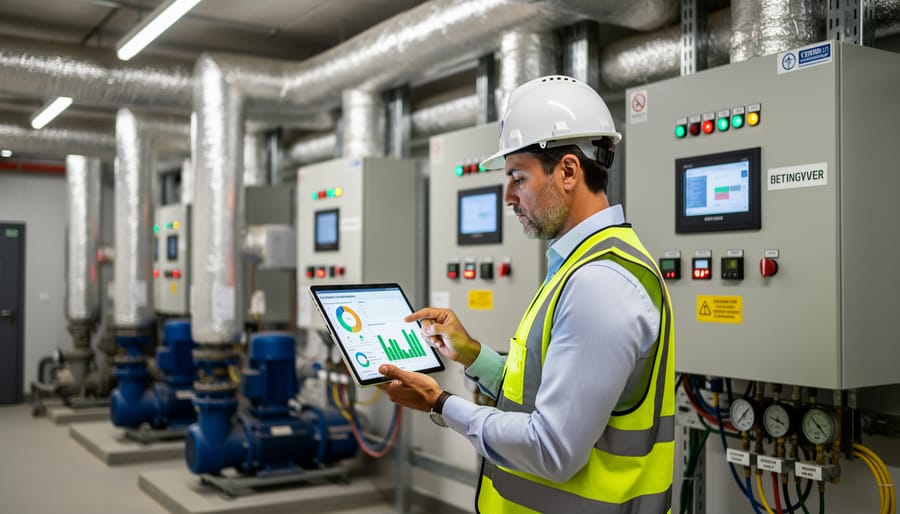
Organizations hire energy efficiency consultants because the return on investment is measurable and compelling. Most energy efficiency projects deliver payback periods between two and five years, with annual cost reductions ranging from 15% to 30% of baseline energy expenditure. A manufacturing facility spending $500,000 annually on utilities can expect to save $75,000 to $150,000 per year through consultant-recommended improvements. When you calculate ROI and payback for these interventions, the financial case becomes straightforward.
Beyond immediate cost reduction, organizations face mounting pressure to meet ESG reporting requirements and carbon reduction mandates. Energy consultants help companies establish credible baseline metrics, develop achievable targets, and document progress for stakeholders and regulatory bodies. This becomes especially critical when addressing Scope 3 emissions and supply chain sustainability commitments.
The competitive advantage of improved energy performance extends beyond financial statements. Organizations with documented sustainability achievements attract investors who prioritize ESG factors, appeal to environmentally conscious customers, and position themselves favorably in sectors where carbon pricing will impact future profitability. Energy resilience also matters: facilities optimized for efficiency maintain operations during utility disruptions and adapt more readily to fluctuating energy prices.
Consultants provide the technical expertise and strategic framework most organizations lack internally. Rather than piecing together efficiency initiatives through trial and error, decision-makers gain a comprehensive roadmap backed by industry data and proven methodologies. The investment in consulting fees typically represents less than 5% of total project costs while dramatically increasing the likelihood of achieving projected savings and avoiding costly missteps.
Consultant-Driven Solutions That Deliver Results
Efficiency Upgrades and Retrofits
Lighting retrofits remain the fastest-win efficiency upgrade consultants recommend. Switching from fluorescent or incandescent fixtures to LED technology typically reduces lighting energy consumption by 50-75%, with payback periods under two years in commercial settings. Beyond simple bulb swaps, consultants design intelligent lighting systems with occupancy sensors and daylight harvesting controls that adjust output based on natural light availability and room usage.
HVAC optimization delivers the largest absolute savings in most facilities, since heating and cooling account for 40-60% of total energy use. Consultants identify opportunities like variable frequency drives on motors, economizer controls that use outside air for free cooling, and upgraded building automation systems that eliminate simultaneous heating and cooling. A properly commissioned HVAC system alone can reduce energy consumption by 15-30% without major capital expenditure.
Building envelope improvements, air sealing, insulation upgrades, and high-performance window replacements, address the root cause of thermal loss. Consultants use thermal imaging and blower door tests to pinpoint leakage points that waste conditioned air. These interventions typically cut energy bills by 10-25% while improving occupant comfort.
Equipment replacements target aging, inefficient systems nearing end-of-life. Consultants benchmark current performance against modern alternatives, high-efficiency boilers, chillers with advanced refrigerants, premium-efficiency motors, and calculate lifecycle cost advantages. Replacing a 20-year-old boiler with a condensing model, for instance, can achieve efficiency gains of 20-35%, justifying upfront investment through reduced fuel consumption and lower maintenance costs.
Renewable Energy Procurement Strategies
Energy efficiency consultants guide organizations through the complex landscape of renewable energy procurement, matching solutions to specific operational profiles and budget realities. Rather than applying a one-size-fits-all approach, they evaluate your energy consumption patterns, financial position, and sustainability targets to recommend the procurement path that delivers the greatest impact.
Power Purchase Agreements (PPAs) often suit organizations with stable, long-term energy demand and strong creditworthiness. Consultants negotiate these contracts directly with renewable energy developers, locking in predictable electricity rates, often below utility prices, while the developer handles construction and maintenance of solar or wind facilities. This shifts renewable energy from a capital expense to an operational one.
For organizations with suitable real estate, consultants assess on-site solar, wind, or geothermal installations. They run feasibility studies accounting for roof condition, sun exposure, local interconnection requirements, and available incentives. On-site generation provides maximum control and the best brand visibility, though it requires upfront investment or creative financing structures.
When physical installation isn’t feasible, consultants structure renewable energy credit (REC) purchases or green tariff programs through existing utilities. RECs allow you to claim renewable energy’s environmental benefits without changing your physical power source. Green tariffs let you support utility-scale renewable projects through your existing provider.
The consultant’s value lies in financial modeling that compares total cost of ownership across options, identifies hidden risks in contract terms, and sequences implementation to maximize incentives while minimizing operational disruption.
Energy Sustainability Financing
Capital constraints shouldn’t derail efficiency projects with clear paybacks. Energy consultants structure financing solutions that make upgrades financially viable without significant upfront investment.
Energy Performance Contracts (EPCs) let organizations implement improvements with no initial capital outlay. The energy service company funds the project, and your savings cover the costs over time. Consultants negotiate favorable terms, verify baseline consumption, and ensure guaranteed savings protect your interests throughout the contract period.
Utility incentive programs offer rebates and grants that reduce project costs by 20-40%. Most organizations leave this money unclaimed because navigating program requirements, application deadlines, and technical documentation proves complicated. Consultants identify applicable incentives, handle paperwork, and maximize your rebate capture.
Green bonds and sustainability-linked loans provide lower interest rates for verified efficiency projects. Consultants prepare the technical documentation lenders require and help structure deals that meet green financing criteria.
Property Assessed Clean Energy (PACE) financing ties loan repayment to property taxes, making it transferable if you sell. Consultants evaluate whether PACE fits your ownership structure and project timeline, then connect you with qualified PACE providers in your jurisdiction.
Monitoring and Verification Programs
Energy efficiency improvements only deliver long-term value if the savings persist and remain measurable. Consultants design monitoring and verification (M&V) programs that go far beyond initial project implementation, establishing systems to track real-time performance, validate projected savings against actual consumption, and identify efficiency drift before it becomes costly.
A well-structured M&V program typically includes baseline establishment, continuous measurement protocols, and regular reporting dashboards that translate raw data into actionable insights. Consultants install submetering infrastructure, configure building automation systems to capture granular energy data, and set up automated alerts that flag anomalies, a failed sensor, an HVAC unit running outside scheduled hours, or unexpected consumption spikes.
The verification component confirms that efficiency measures perform as promised. Consultants compare post-implementation energy use against weather-normalized baselines, adjusting for variables like occupancy changes or production schedules. This independent validation proves critical for performance contracts and incentive programs that require documented savings.
Perhaps most importantly, M&V programs address the persistence of energy savings over time. Without ongoing monitoring, energy consumption typically creeps back toward pre-improvement levels due to equipment degradation, control drift, and operational changes. Regular quarterly or annual verification reports keep stakeholders informed and ensure corrective action happens quickly, protecting the financial and environmental returns that justified the initial investment.
Case Study: University Campus Energy Transformation

When a mid-sized public university in the Pacific Northwest faced aging infrastructure and rising energy costs consuming nearly 8% of its operating budget, leadership brought in an energy efficiency consultant to chart a path toward sustainability.
The university operated 42 buildings across 250 acres, with 30-year-old boilers, outdated lighting, and no centralized energy management system. Annual energy expenses exceeded $4.2 million, and the institution had committed to carbon neutrality by 2035 but lacked a clear roadmap.
The consultant began with comprehensive energy audits across all facilities, analyzing utility data, conducting thermal imaging scans, and interviewing facilities staff. This baseline assessment revealed lighting and HVAC systems accounted for 67% of total energy use, with significant waste from unoccupied spaces running at full capacity overnight and on weekends.
The recommended energy strategy combined immediate efficiency wins with longer-term renewable integration. Phase one replaced 18,000 fixtures with LED lighting and installed occupancy sensors in classrooms and labs. Phase two upgraded three major boiler plants with high-efficiency condensing units and implemented a building automation system for centralized control. Phase three added a 2.1 MW solar array on parking structures and secured a 10-year renewable energy purchase agreement covering 40% of remaining electricity needs.
Beyond the numbers, the consultant established ongoing measurement protocols and trained facilities teams to sustain performance improvements, ensuring the university stayed on track toward its carbon neutrality goal while freeing up budget for academic priorities.
How to Choose the Right Energy Efficiency Consultant
Selecting an energy efficiency consultant requires the same rigor you’d apply to any strategic hire. Start by verifying professional credentials: Certified Energy Manager (CEM), LEED AP, or Association of Energy Engineers (AEE) membership signal formal training and industry commitment. Review their project portfolio for direct experience in your sector, higher education campuses face different challenges than manufacturing facilities or hospital complexes.
Ask targeted questions during initial conversations. Request case studies with measurable results: percentage reductions in energy use, actual dollar savings, and implementation timelines. Inquire how they stay current on federal and state incentive programs relevant to your location, since missing available rebates or tax credits directly impacts your ROI.
Assess their diagnostic approach. Strong consultants conduct thorough site assessments before proposing solutions, rather than recommending cookie-cutter packages. Generic recommendations rarely address your unique operational constraints, equipment age, or budget cycles. Understanding how customization fixes fundamental inefficiencies separates transformative consulting from template reports.
Evaluate communication style and accessibility. You need a consultant who translates technical findings into business language your CFO and board understand, and who responds promptly during implementation phases when questions arise.
Finally, clarify engagement structure upfront. Will they charge flat fees, hourly rates, or performance-based compensation tied to verified savings? Request references from similar organizations and actually call them, ask specifically about responsiveness during problems and whether projected savings materialized.
The right consultant becomes a strategic partner who understands your operational realities, not just your energy bills. Take time to find that alignment; the decision shapes your efficiency trajectory for years.
Common Questions About Energy Efficiency Consulting
Decision-makers evaluating consultant partnerships want clear answers about logistics, costs, and outcomes before committing. Here’s what you need to know about engaging an energy efficiency consultant.
How long does a typical consulting engagement last?
Initial assessments usually take 4-8 weeks, while full implementation projects span 6-18 months depending on scope and complexity. Many organizations maintain ongoing relationships for monitoring and continuous improvement.
What does energy efficiency consulting cost?
Fees vary widely based on project scope, with initial audits ranging from $5,000 to $25,000 and comprehensive programs costing 3-7% of projected savings. Most consultants offer flexible fee structures including flat fees, hourly rates, or performance-based arrangements tied to verified savings.
How do we measure success and ROI?
Consultants establish baseline energy consumption and costs, then track progress through utility data, meter readings, and operational metrics. Success is measured by percentage reductions in energy use, cost savings achieved, and carbon emissions avoided, all verified against the baseline.
What internal resources do we need to dedicate?
Expect to assign a project champion (typically facilities or sustainability staff) who commits 5-10 hours weekly during active phases. You’ll also need periodic input from finance, operations, and senior leadership for decision points.
The consulting process typically starts with a discovery phase where the consultant reviews your utility bills, tours facilities, and interviews key staff to understand your operations and goals. This groundwork informs a detailed assessment that identifies opportunities ranked by savings potential and implementation complexity.
During strategy development, consultants present options with financial projections, payback periods, and risk assessments. They’ll help you prioritize initiatives based on your budget, timeline, and strategic objectives. Implementation support varies, some consultants manage vendor selection and project execution, while others provide oversight and validation as your internal team leads.
Transparency matters throughout. Reputable consultants document their methodology, share data openly, and involve your team in decision-making rather than delivering black-box recommendations. They should explain technical concepts in business terms and connect efficiency improvements to your broader organizational priorities, whether that’s cost control, sustainability commitments, or operational excellence.
Energy efficiency consulting represents a strategic investment that delivers measurable returns across financial, environmental, and operational dimensions. Organizations that partner with qualified consultants gain access to specialized expertise, proven methodologies, and customized strategies that accelerate progress toward sustainability targets while reducing energy costs by 20 to 40 percent on average.
As regulatory requirements tighten and stakeholder expectations around ESG performance intensify, expert guidance becomes increasingly valuable for navigating complex decisions about efficiency upgrades, renewable energy procurement, and performance verification. The consultants who deliver the greatest value understand both the technical aspects of energy systems and the financial realities of organizational decision-making.
Consider evaluating your current energy performance through a professional audit. The insights gained typically reveal opportunities that pay for themselves within two to three years, establishing a foundation for long-term energy resilience and competitive advantage in an increasingly carbon-conscious marketplace.