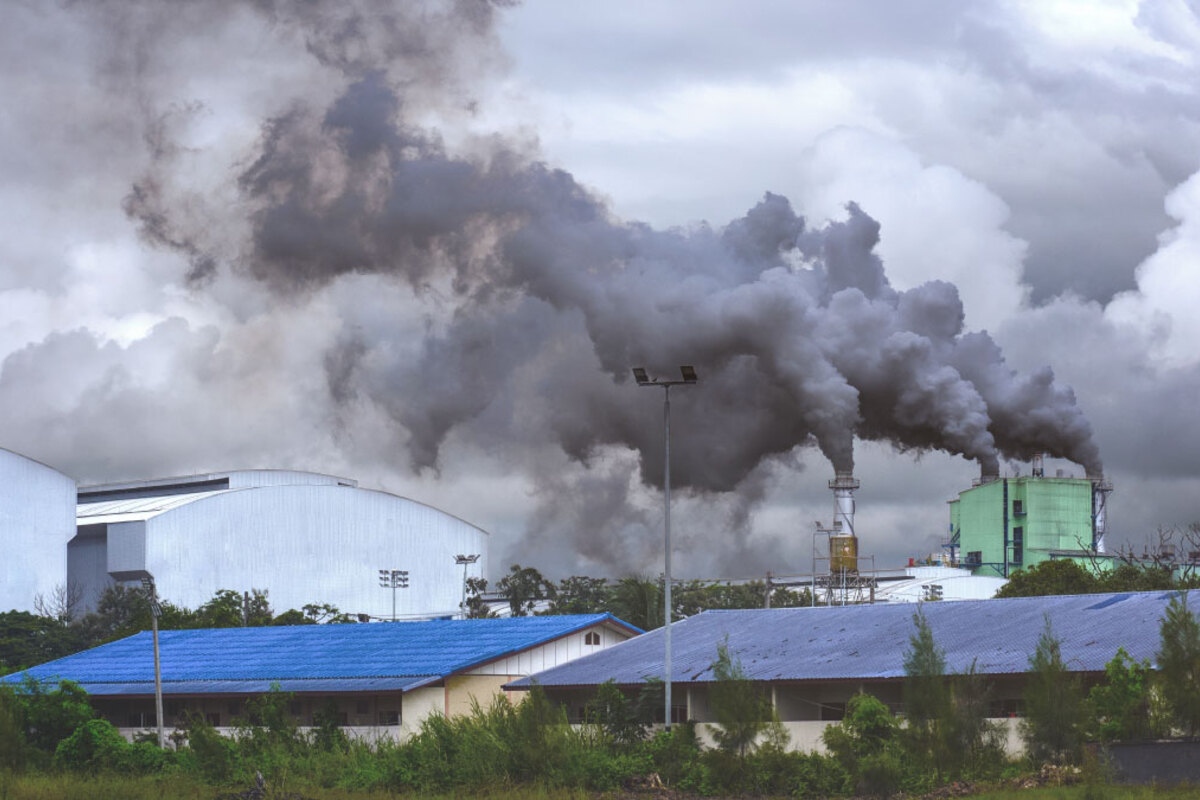
Hydrogen energy is produced by separating hydrogen from compounds like water or natural gas through chemical, thermal, or electrical processes. As organizations worldwide pursue decarbonization targets in 2026, understanding how hydrogen is generated has become essential for business leaders evaluating clean energy investments. The method used to produce hydrogen determines both its environmental impact and economic viability, creating direct implications for corporate energy sustainability strategies.
This article breaks down the four primary production methods currently deployed at scale: steam methane reforming, electrolysis, gasification, and pyrolysis. Each approach carries distinct cost structures, carbon footprints, and operational requirements that matter when building a business case for hydrogen adoption. Organizations from university campuses to hospital systems are already integrating hydrogen into their energy portfolios, but success depends on selecting the right production pathway for your specific application and sustainability goals. We’ll clarify the color-coding system that categorizes hydrogen by production method, examine real-world implementation examples, and provide strategic guidance to help you determine whether hydrogen fits your organization’s energy transition roadmap.
What Hydrogen Energy Production Means for Your Organization
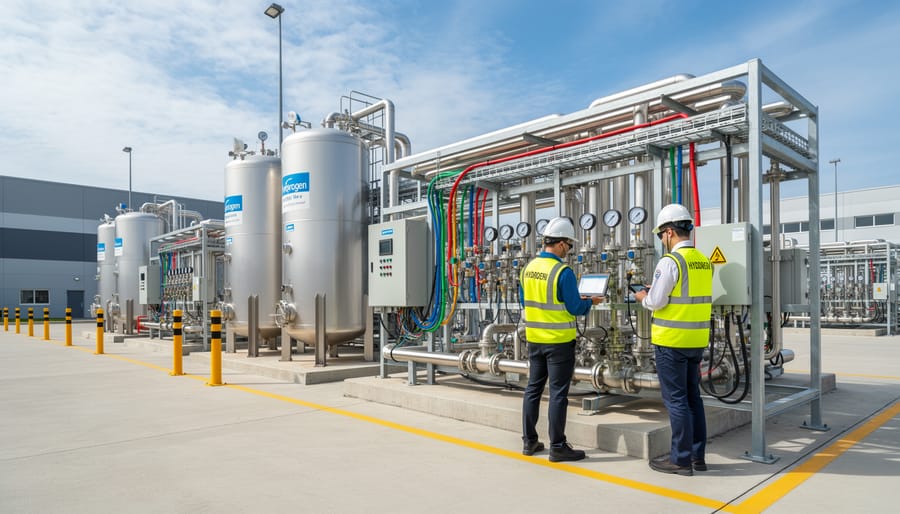
Hydrogen energy production is the industrial process of extracting pure hydrogen from hydrogen-rich compounds, typically natural gas, water, or biomass, to create a versatile energy carrier that can store, transport, and deliver power without combustion emissions. Unlike fossil fuels or even renewable sources like solar and wind that generate energy directly, hydrogen itself does not exist freely in nature; it must be separated from other elements through energy-intensive processes before it can power fuel cells, turbines, or industrial equipment.
For organizations with decarbonization mandates, understanding this distinction matters. Hydrogen acts as a bridge between your energy supply and end-use applications, converting electricity or chemical energy from feedstocks into a storable, transportable fuel. This flexibility makes it particularly relevant for institutions managing complex energy portfolios, manufacturing facilities seeking alternatives to natural gas, universities aiming to electrify campus fleets, hospitals requiring resilient backup power, or logistics operations trying to reduce Scope 3 emissions from transportation.
- Energy carrier
- A substance that stores energy produced elsewhere and releases it on demand, rather than generating energy itself. Hydrogen must be produced using another energy source before it can deliver power.
- Feedstock
- The raw material input for hydrogen production, most commonly natural gas, water, or biomass. The feedstock choice determines both the production method and the carbon footprint.
- Electrolysis
- A chemical process that uses electricity to split water molecules into hydrogen and oxygen. When powered by renewables, this method produces zero-emission hydrogen.
- Carbon intensity
- The amount of carbon dioxide released per unit of hydrogen produced, typically measured in kilograms of CO₂ per kilogram of H₂. This metric determines whether hydrogen qualifies as low-carbon under emerging regulations.
The production method you select directly affects your ESG reporting, operational costs, and regulatory compliance. Organizations pursuing net-zero commitments need hydrogen with low carbon intensity, which requires either renewable-powered electrolysis or natural gas reformation paired with carbon capture technology.
How Hydrogen Energy Is Produced: Core Methods Explained
Steam Methane Reforming (Gray and Blue Hydrogen)
Steam methane reforming (SMR) accounts for the vast majority of hydrogen production worldwide today. SMR produces most hydrogen because it is the most economically mature pathway, with decades of industrial refinement and established infrastructure around natural gas supply.
The process works by reacting natural gas (primarily methane) with high-temperature steam in the presence of a catalyst. This reaction breaks down the methane molecules and combines the hydrogen atoms with steam, producing hydrogen gas and carbon dioxide as a byproduct. A typical SMR facility operates at temperatures between 700°C and 1,000°C, requiring significant energy input to sustain the reaction.
The carbon emissions profile of SMR is where the gray-blue distinction becomes critical for organizations evaluating hydrogen procurement. Gray hydrogen refers to SMR without any carbon capture, meaning all CO2 produced in the process is released directly into the atmosphere. Each kilogram of gray hydrogen generated creates roughly 9 to 10 kilograms of carbon dioxide emissions, making it incompatible with aggressive decarbonization targets.
Blue hydrogen uses the same SMR process but incorporates carbon capture, utilization, and storage (CCUS) technology to trap 60% to 90% of the CO2 before it reaches the atmosphere. The captured carbon is then either permanently stored in geological formations or repurposed for industrial uses. Blue hydrogen offers a transitional pathway for organizations with existing natural gas infrastructure, delivering meaningful emissions reductions while green hydrogen production scales up.
Electrolysis (Green Hydrogen)
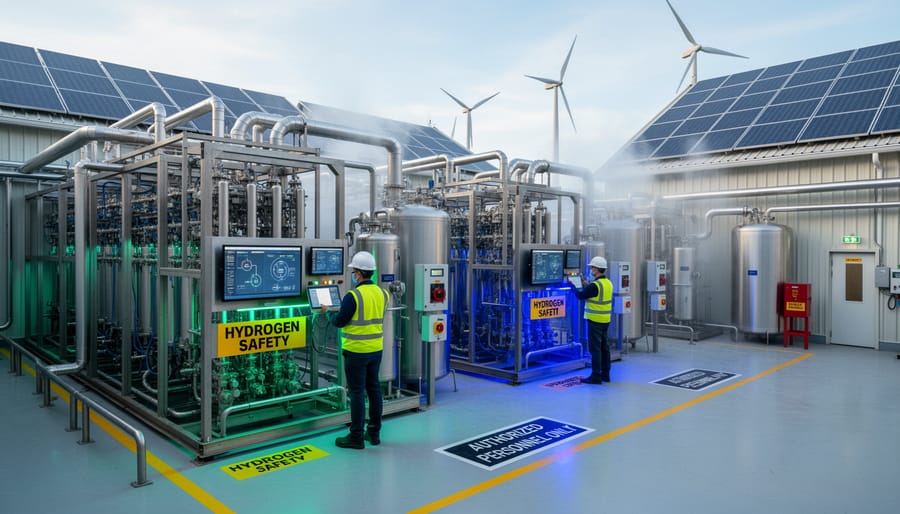
Electrolysis uses electricity to split water (H₂O) into hydrogen and oxygen. When that electricity comes from renewable sources, solar, wind, or hydro, electrolysis can be zero-emission producing what the industry calls green hydrogen. The only inputs are water and clean power; the only byproduct is oxygen.
The process happens inside an electrolyzer, a device that passes an electrical current through water. At the cathode, water molecules gain electrons and release hydrogen gas. At the anode, they lose electrons and release oxygen. The basic chemistry is straightforward, but the technology varies significantly depending on the electrolyzer design.
Organizations evaluating green hydrogen projects will encounter three main types: alkaline, PEM and solid oxide. Alkaline electrolyzers are the most mature and cost-effective option, using a liquid electrolyte solution and operating at lower pressures. They suit large-scale industrial applications where steady baseload power is available, though they respond more slowly to variable renewable inputs.
Proton exchange membrane (PEM) electrolyzers use a solid polymer membrane and can ramp output up or down quickly, making them ideal for pairing with intermittent solar or wind generation. They produce higher-purity hydrogen and operate at higher pressures, reducing compression costs downstream. PEM units typically cost more upfront but offer greater operational flexibility.
Solid oxide electrolyzers operate at high temperatures (700-900°C), which improves efficiency when waste heat is available, common in industrial facilities or combined heat and power systems. They remain less commercially mature but represent a strategic fit for energy-intensive campuses or manufacturing sites with thermal integration opportunities.
The choice depends on your renewable energy profile, demand pattern, and existing infrastructure.
Emerging Production Pathways
Beyond steam methane reforming and electrolysis, several emerging production pathways show promise for scaling low-carbon hydrogen in specific contexts. These methods remain in pilot or early commercial stages, but they address niche feedstock opportunities and could complement the dominant pathways as infrastructure matures.
Biomass gasification converts organic waste, agricultural residues, forestry byproducts, municipal solid waste, into syngas through high-temperature reactions with limited oxygen. The syngas is then processed to isolate hydrogen. When paired with carbon capture, this pathway can approach carbon neutrality or even achieve negative emissions if the biomass feedstock is sustainably sourced. Early commercial plants are operating in Europe and Japan, though scaling depends on feedstock logistics and establishing consistent supply chains.
Methane pyrolysis, which produces turquoise hydrogen, splits natural gas into hydrogen and solid carbon without combustion. Instead of releasing CO₂, the process yields marketable carbon black that can be used in tires, construction materials, or industrial applications. This approach avoids the energy penalty of carbon capture and offers a lower-carbon bridge from existing gas infrastructure. Several demonstration units are running in North America and Europe, with commercial viability hinging on carbon product markets and cost competitiveness with blue hydrogen.
- Biomass gasification: agricultural and forestry waste feedstock; pilot and early commercial deployment in select regions
- Methane pyrolysis (turquoise hydrogen): natural gas feedstock with solid carbon byproduct; demonstration phase with commercial plants under construction
- Thermochemical water splitting: high-temperature heat from nuclear or concentrated solar; laboratory and pilot stage, not yet commercially proven
- Photoelectrochemical production: direct solar-to-hydrogen conversion using specialized materials; research phase with efficiency targets unmet for commercial use
Thermochemical water splitting uses high-temperature heat, potentially from advanced nuclear reactors or concentrated solar facilities, to drive chemical cycles that separate hydrogen from water without electricity. This pathway remains largely in the research and pilot phase, with efficiency and material durability challenges still being resolved.
For organizations evaluating hydrogen in 2026, these emerging methods are not yet turnkey solutions. They represent future optionality rather than immediate procurement choices, particularly for facilities with access to unique feedstocks or co-located heat sources that could make unconventional pathways economically attractive.
Understanding the Color-Coded Classification System
The hydrogen industry uses a color-based naming system to quickly communicate how hydrogen is produced and its environmental footprint. Understanding these classifications helps your organization evaluate suppliers, assess carbon accounting implications, and make procurement decisions aligned with your sustainability commitments.
Gray hydrogen represents the baseline: hydrogen produced from natural gas through steam methane reforming without carbon capture, releasing approximately 9-12 kg of CO2 per kilogram of hydrogen. This accounts for roughly 95% of current global production and remains the most cost-effective option in most markets, though it offers no emissions advantage over conventional fuels.
Blue hydrogen uses the same production process but captures and stores the resulting CO2 emissions, typically achieving 60-90% carbon capture rates depending on the configuration. The captured carbon is either sequestered underground or utilized in industrial processes, significantly reducing, though not eliminating, the carbon footprint.
Green hydrogen comes from water electrolysis powered entirely by renewable electricity. When paired with wind, solar cell technology or hydropower, it produces zero direct emissions. While currently more expensive than gray or blue options, costs are declining as renewable energy and electrolyzer technology mature.
Turquoise hydrogen emerges from methane pyrolysis, which splits natural gas into hydrogen and solid carbon rather than CO2. The carbon byproduct can be sold or stored, offering lower emissions than gray hydrogen without requiring geological CO2 storage.
Pink hydrogen (also called purple or red) refers to production using nuclear energy to power electrolysis, providing zero-emission hydrogen with high capacity factors and consistent output.
For strategic planning, focus less on memorizing colors and more on carbon intensity metrics and certification standards that verify production methods, these will determine whether hydrogen qualifies for tax credits, meets corporate climate targets, and aligns with emerging procurement standards.
Where Hydrogen Energy Production Makes Strategic Sense
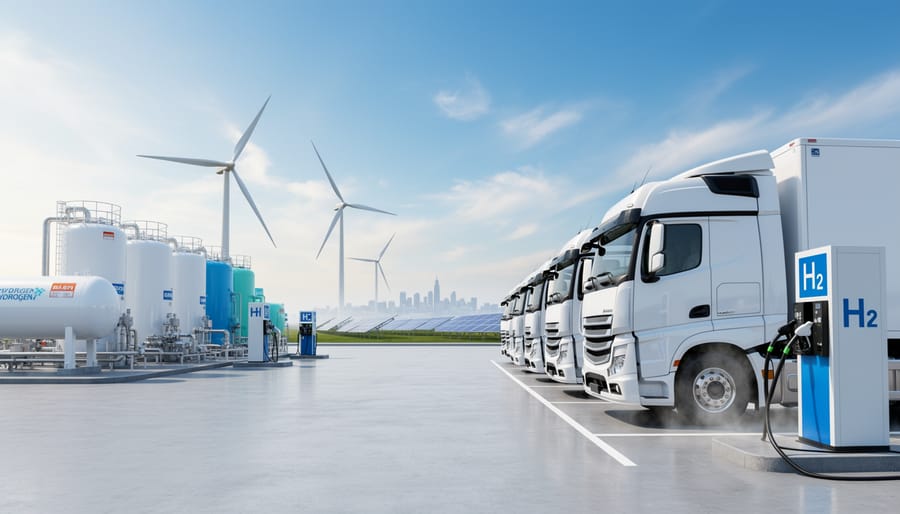
Hydrogen energy production becomes strategically valuable when it addresses specific operational challenges that conventional energy sources struggle to meet. Organizations should focus on applications where hydrogen’s unique properties, high energy density, zero emissions at point of use, and ability to store renewable energy, deliver measurable advantages over electrification or fossil fuels.
Industrial facilities with high-temperature heating requirements present the clearest case for hydrogen adoption. Steel production, chemical manufacturing, and glass production require process heat above 1,000°C that electricity struggles to deliver efficiently. A cement plant in California replaced natural gas burners with hydrogen combustion systems in 2025, reducing Scope 1 emissions by 68% while maintaining production output. These facilities typically have existing gas infrastructure that can be adapted for hydrogen with targeted upgrades.
University and hospital campuses benefit from hydrogen fuel cells as backup power and combined heat-and-power systems. A 2026 deployment at a Michigan teaching hospital uses a 500-kW fuel cell system that provides both electricity and thermal energy for sterilization processes. The installation reduced diesel generator runtime by 94% during grid outages while meeting stringent air quality standards for healthcare environments.
Heavy transport fleets operating on fixed routes with central return points avoid the infrastructure challenges of widespread hydrogen distribution. Municipal bus systems in Europe and Asia have demonstrated this model successfully, with refueling times under 15 minutes enabling continuous operation. Port logistics companies are similarly adopting hydrogen forklifts and cargo handlers where battery weight penalties reduce payload capacity.
Energy storage applications pair hydrogen production with renewable generation to address intermittency. A Texas wind farm converts excess generation to hydrogen during low-demand periods, storing energy seasonally for re-electrification or industrial offtake. This approach transforms curtailed renewable energy into a storable commodity rather than wasted capacity.
Real-World Implementation: Production in Action
The University of California, Irvine demonstrates how hydrogen production integrates into institutional energy systems. In 2015, UCI installed a 2.8-megawatt solid oxide fuel cell system that generates electricity while producing hydrogen as part of the campus microgrid. The university paired this with a 100-kilowatt alkaline electrolyzer that converts excess solar energy into hydrogen, creating a closed-loop energy storage solution.
UCI chose electrolysis specifically because it aligned with California’s renewable portfolio standards and the institution’s carbon neutrality commitment. The electrolyzer operates during periods of high solar output, storing energy that would otherwise be curtailed. During evening peak demand or grid outages, the stored hydrogen powers fuel cells that supply both electricity and thermal energy to campus buildings.
The integration required upgrading the electrical distribution system to handle bidirectional power flow and installing hydrogen compression and storage tanks capable of holding 500 kilograms. UCI worked with Southern California Gas Company to ensure compliance with safety codes and developed operational protocols for hydrogen handling that satisfied both campus environmental health teams and state regulators.
After five years of operation, the system reduced campus grid electricity purchases by 18% and cut carbon emissions by roughly 1,500 metric tons annually. During a 2020 Public Safety Power Shutoff event, the hydrogen-supported microgrid kept critical research facilities operational for 36 hours. Energy cost savings averaged $220,000 per year, with the university securing $12.8 million in state grants and utility incentives that covered 65% of the initial $19.6 million capital investment.
The project’s success influenced similar installations at Arizona State University and several California community colleges evaluating hydrogen for energy resilience.
Strategic Considerations for Hydrogen Adoption
Before committing to hydrogen, evaluate whether it fits your organization’s operational profile and long-term energy goals. Start by assessing infrastructure readiness: do you have space for electrolyzers or on-site storage, existing renewable capacity to power green hydrogen, or access to natural gas pipelines if blue hydrogen makes sense as a transition step? Organizations with distributed facilities may prefer procurement agreements over in-house production, while industrial campuses with thermal loads and reliable renewable sources often justify capital investment.
Cost trajectories matter. Green hydrogen remains more expensive than gray in 2026, but the gap is closing as electrolyzer prices drop and carbon pricing tightens. Factor in available federal tax credits for clean hydrogen production, state-level incentives for renewable integration, and potential offtake agreements that stabilize long-term pricing. Run scenarios across five- and ten-year horizons rather than judging solely on current spot rates.
Supply chain maturity varies by region. Assess local availability of equipment, skilled contractors for installation and maintenance, and fuel delivery logistics if you’re not producing on-site. A one-size approach rarely works; customization fixes the mismatch between generic hydrogen strategies and your facility’s specific load profiles, space constraints, and risk tolerance.
When evaluating options, use this checklist:
- Infrastructure compatibility: existing utilities, space for production or storage, and grid capacity
- Total cost of ownership: capital, operating expenses, incentives, and carbon compliance costs
- Supply chain access: equipment lead times, service networks, and fuel logistics
- Alignment with ESG targets: emissions reductions, reporting requirements, and stakeholder expectations
- Operational resilience: backup power needs, energy security priorities, and grid independence goals
Align procurement with sustainability targets by choosing production pathways that meet your carbon intensity thresholds. If you’re pursuing net-zero commitments, green hydrogen offers the clearest path; blue can serve as a bridge if paired with credible carbon capture verification.
Common Questions About Hydrogen Energy Production
How efficient is hydrogen production compared to direct electricity use?
Electrolysis converts roughly 60-80% of electrical energy into stored hydrogen energy, with additional conversion losses when reconverting hydrogen to electricity. For applications requiring long-duration storage, portable energy, or industrial feedstock, hydrogen’s versatility often outweighs efficiency penalties compared to battery systems.
Is hydrogen production and storage safe for facility operations?
Hydrogen has an excellent safety record when proper protocols are followed, including leak detection systems, ventilation design, and material compatibility standards. The gas disperses rapidly upward rather than pooling like heavier fuels, and modern production equipment incorporates multiple redundant safety mechanisms developed over decades of industrial hydrogen use.
Can hydrogen production integrate with our existing energy infrastructure?
Many facilities can integrate electrolyzer systems into current electrical distribution networks, though natural gas-based production may require pipeline modifications. Water supply and treatment capacity should be assessed for electrolysis projects, while storage and distribution systems typically need purpose-built infrastructure or retrofitted equipment with hydrogen-compatible materials.
What does hydrogen production cost compared to conventional energy sources?
Green hydrogen production costs have dropped significantly but remain higher than natural gas in most markets, with current levelized costs ranging from $3-7 per kilogram depending on renewable electricity prices. Blue hydrogen with carbon capture sits between gray and green hydrogen economically, while policy incentives in 2026 increasingly narrow the gap for qualifying projects.
How soon will hydrogen production become commercially viable at scale?
Industrial-scale production technology exists today and operates at hundreds of facilities worldwide, particularly for industries like ammonia manufacturing and refining. The transition to low-carbon hydrogen production methods is accelerating, with electrolyzer manufacturing capacity expanding rapidly and project pipelines growing across transportation, power generation, and industrial sectors through the late 2020s.
What regulatory considerations affect hydrogen production decisions?
Organizations must navigate evolving clean hydrogen tax credits, state renewable portfolio standards, utility interconnection requirements, and emerging emissions verification protocols. Building permit processes increasingly recognize hydrogen systems, though local fire codes and zoning regulations vary considerably by jurisdiction and may require education of approval authorities unfamiliar with modern hydrogen technologies.
Understanding these practical considerations helps organizations move from concept evaluation to implementation planning. The regulatory landscape continues maturing alongside technology deployment, creating both complexity and opportunity for early adopters who can position their facilities to benefit from incentive programs while establishing operational expertise. For many institutions, hydrogen production represents one component of broader strategies to cut energy bills and meet decarbonization commitments, particularly when coupled with on-site renewable generation that can supply low-cost electricity during peak production periods.
Understanding how hydrogen is produced gives your organization the foundation to evaluate its role in your energy future. The production landscape in 2026 centers on a clear trend: the shift from fossil fuel-based methods toward electrolysis powered by renewable electricity. While steam methane reforming still dominates current supply, falling costs for solar and wind energy are making green hydrogen increasingly viable for forward-thinking institutions.
The color-coded classification system helps you assess options based on carbon intensity and alignment with your sustainability commitments. Whether you’re a university pursuing net-zero targets, a manufacturer seeking to decarbonize operations, or a government agency planning resilient infrastructure, hydrogen production methods offer different pathways to match your goals, timeline, and budget.
Starting with pilot projects or hybrid approaches allows you to build expertise while the technology matures. Our team works with organizations like yours to evaluate which production pathway fits your specific needs, navigate available incentives, and develop implementation plans that deliver measurable results. Hydrogen energy production isn’t one-size-fits-all, and the right strategy depends on your operational context and long-term vision.